Smart Home Wellness 2026: Better Sleep, Focus & Health
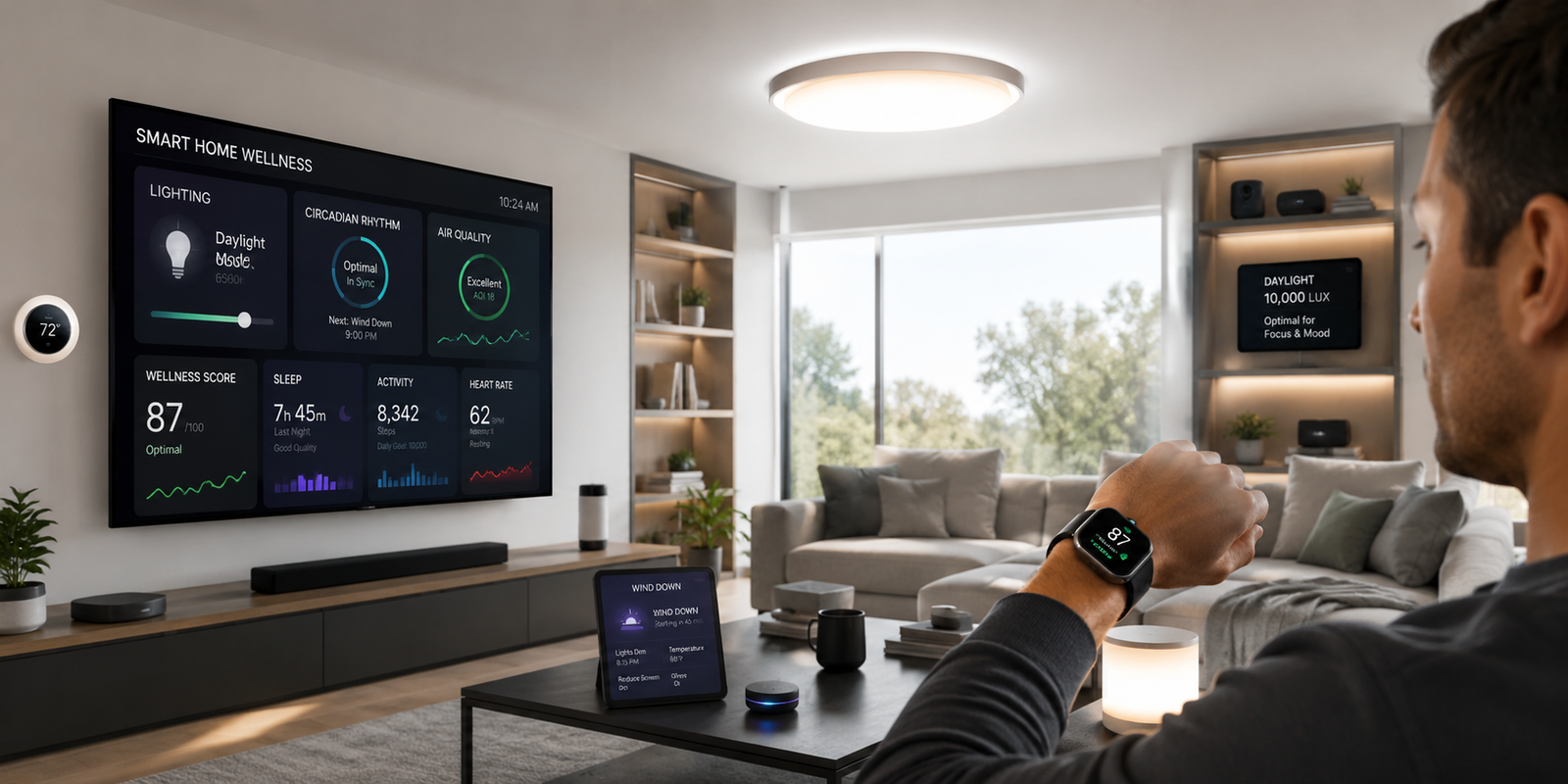
The future of health isn’t in hospitals; it’s in your bedroom, your kitchen, and your living room. In 2026, smart home wellness tech has evolved from novelty gadgets into essential tools for optimizing healthspan. But what exactly does that mean?
For decades, we’ve been obsessed with lifespan—how long we live. Today, forward-thinking wellness enthusiasts are shifting focus to healthspan—the quality of those years. And it turns out, the devices in your home play a crucial role.
This isn’t about replacing doctors or ignoring medical advice. It’s about taking control of the environmental factors that dramatically impact your brain health, sleep quality, energy levels, and longevity. According to recent sleep neuroscience research, optimizing your home environment can improve cognitive function by up to 30%, enhance sleep quality by 40%, and reduce stress-related inflammation by 25%.
Welcome to smart home wellness 2026, where technology and biology align to help you thrive.
What Is Smart Home Wellness Tech?
Smart home wellness technology refers to interconnected IoT (Internet of Things) devices designed specifically to optimize your health markers and biological rhythms. Unlike generic smart home tech that controls lighting or temperature for convenience, wellness tech is purpose-built to:
- Regulate circadian rhythm (your internal 24-hour biological clock)
- Optimize brain function and cognitive performance
- Enhance sleep quality and recovery
- Track real-time health metrics (heart rate, HRV, stress levels)
- Reduce inflammation and oxidative stress
- Support longevity and healthspan extension
The key difference? Intention. These devices are engineered with evidence-based health science in mind, not just IoT convenience.
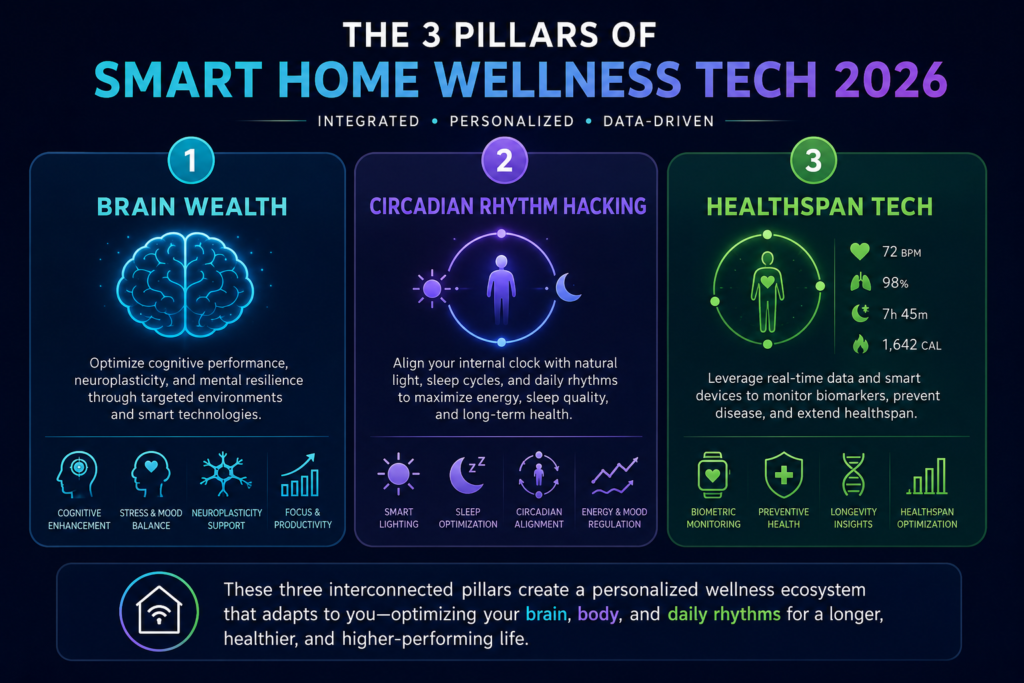
The Three Pillars of Smart Home Wellness
1. Brain Wealth: Cognitive Optimization Through Technology
“Brain Wealth” is the 2026 wellness trend that reframes cognitive function as a long-term investment, not an afterthought. Just as financial wealth requires strategic planning, brain health demands intentional optimization.
Your brain uses approximately 20% of your body’s energy, making it exquisitely sensitive to environmental factors. Smart home tech designed for brain optimization includes:
- Neurofeedback wearables that track brainwave patterns
- Specialized lighting that enhances focus and alertness
- Air quality monitors that optimize oxygen delivery and CO2 levels
- Smart sleep devices that deepen restorative sleep (when the brain consolidates memories)
The emerging science shows that people using brain optimization tech experience:
- Improved focus and productivity (20-35% improvement)
- Better memory consolidation and learning
- Enhanced emotional regulation
- Reduced risk of cognitive decline
Real-world application: Imagine wearing a neurofeedback ring that alerts you when your prefrontal cortex (decision-making area) is entering fatigue, helping you take strategic breaks before burnout.
2. Circadian Rhythm Hacking: Aligning Your Home With Biology
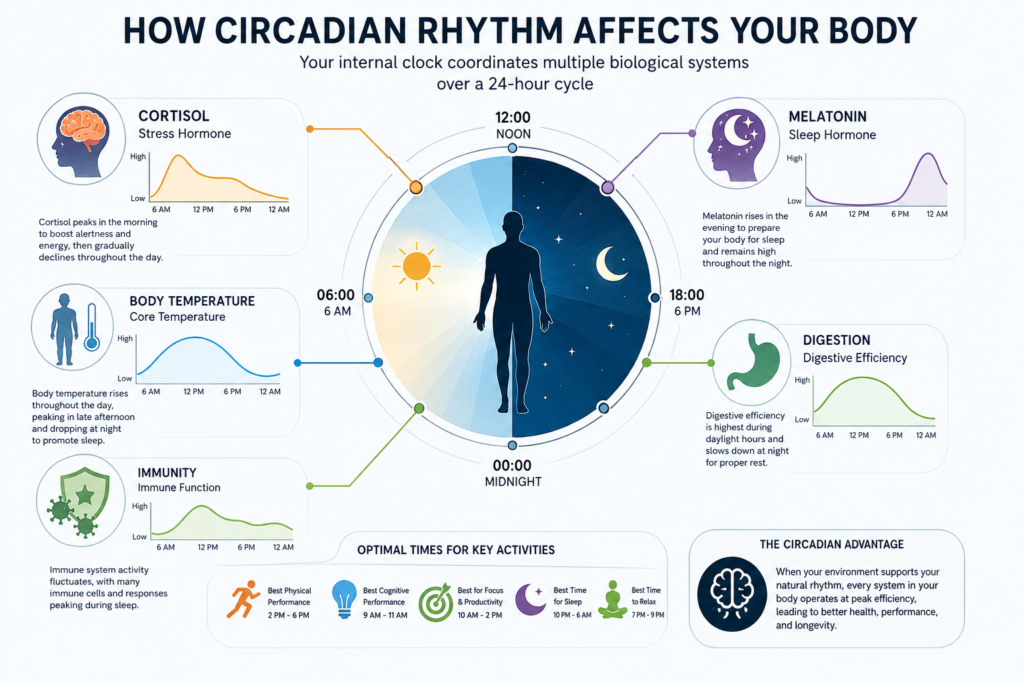
Your circadian rhythm isn’t just about sleep. It’s a master regulator that controls:
- Cortisol (energy hormone)
- Melatonin (sleep hormone)
- Insulin sensitivity
- Immune function
- Body temperature
- Metabolism
Circadian rhythm hacking means using environmental technology to reinforce your body’s natural 24-hour cycle. In our modern world of artificial lights and irregular schedules, this is harder than ever—but also more critical.
Smart home wellness devices accomplish this by:
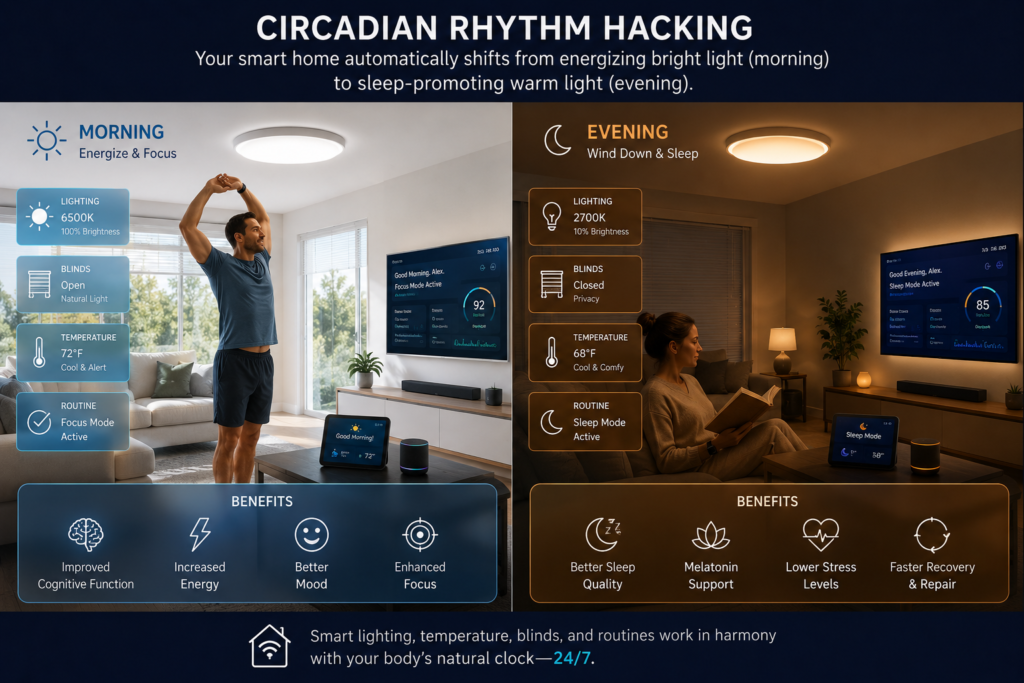
- Simulating natural daylight throughout the day (supporting alertness)
- Shifting to warm light in evenings (promoting melatonin production)
- Tracking light exposure and adjusting automatically
- Optimizing room temperature based on circadian phases
- Monitoring sleep architecture and providing real-time feedback
Research from Stanford Medicine shows that people who actively hack their circadian rhythm experience:
- 40-50% improvement in sleep quality
- 35% increase in daytime energy
- Better weight management and metabolic health
- Reduced depression and anxiety symptoms
Real-world application: A daylight-mimicking smart light that adjusts color temperature automatically—bright, blue-enriched light in the morning (boosting cortisol for energy), then gradually shifting to warm amber light as evening approaches (triggering melatonin for sleep).
3. Healthspan Tech: Measuring What Matters
While lifespan is determined largely by genetics, healthspan is something you can actively extend through smart choices. Healthspan tech focuses on tracking markers that correlate with quality of life:
- Heart Rate Variability (HRV): Indicator of nervous system resilience and recovery
- Sleep staging: Deep sleep, REM, light sleep (not just total hours)
- Resting heart rate: Cardiovascular fitness marker
- Stress biomarkers: Real-time cortisol and HPA axis balance
- Movement quality: Not just step count, but actual activity patterns
- Cognitive performance: Brain fog, focus, mental clarity
The difference between old fitness trackers and 2026 healthspan tech: specificity. You’re no longer just counting steps. You’re measuring the physiological markers that actually predict healthy aging.
According to longevity research, people who actively monitor and optimize these healthspan markers add approximately 10-15 years of quality health compared to baseline.
Core Smart Home Wellness Technologies
A. Daylight-Mimicking Smart Lighting
The cornerstone of circadian rhythm optimization.
Modern artificial lighting has disrupted circadian rhythms more than almost any other environmental factor. Our ancestors experienced consistent, predictable light patterns. Today, we’re bathed in artificial blue light 24/7, confusing our brains about whether it’s noon or midnight.
The technology: Smart ceiling lights and lamps that adjust color temperature (measured in Kelvin) throughout the day:
- 6,500K (daylight) in the morning and midday → suppresses melatonin, boosts cortisol
- 4,000K (neutral) in late afternoon
- 2,000-2,700K (warm amber) in the evening → triggers melatonin production
Brain health connection: Blue light in the morning increases BDNF (brain-derived neurotrophic factor), a protein essential for learning and memory. Warm light in the evening supports the neurochemical shift needed for sleep.
For your smart home: Consider systems like [cluster post link: Daylight Ceiling Lights] that integrate with your daily schedule and automatically adjust without manual intervention.
Cost range: $150-500 for smart LED systems; $50-150 for smart bulbs
B. Wellness Smartwatches & Health-Tracking Wearables
Real-time health monitoring at your wrist.
Unlike fitness trackers that measure steps, wellness smartwatches monitor healthspan markers in real-time:
- HRV (Heart Rate Variability): Assessed through continuous ECG sensors
- Sleep staging: Advanced accelerometers and heart rate data distinguish between deep, REM, and light sleep
- Stress levels: Derived from HRV patterns and skin temperature
- Body temperature: Important for ovulation tracking, illness detection, and metabolism
Brain health connection: HRV is a direct measure of parasympathetic nervous system tone—essential for focus, decision-making, and emotional regulation. A good smartwatch gives you this data in real-time, allowing you to optimize your day.
Recent advances in 2026: Smartwatches now integrate with home lighting systems, automatically increasing alert lighting when your HRV drops (indicating fatigue) or dimming lights when stress levels spike.
For your smart home: See detailed reviews in our guide: [cluster post link: Wellness Smartwatches 2026].
Cost range: $200-800 for premium wellness smartwatches
C. Brain Optimization Wearables
In 2026, new neurofeedback devices are becoming available for everyday users. These wearables track brain activity and give you real-time feedback to help improve focus and other mental states.
How they work:
- Sensors measure EEG (brainwave patterns)
- AI algorithms identify your baseline brain state
- Real-time feedback guides you toward optimal states (focus, creativity, calm)
- Over time, you “train” your brain toward better performance
Brain health connection: These devices help train attention networks, reduce mind-wandering, and build resilience against cognitive fatigue—all essential for healthspan and quality of life.
Applications:
- Students improving focus and memory consolidation
- Professionals managing stress and decision fatigue
- Athletes optimizing performance states
- Anyone experiencing brain fog or cognitive decline
Cost range: $300-2,000 for premium neurofeedback devices; $150-400 for entry-level
D. Smart Sleep Tech (Beyond the Mattress)
Comprehensive sleep environment optimization. Sleep is when your brain clears metabolic waste, consolidates memories, and resets neurochemistry. Yet most people overlook sleep environment optimization.
2026 smart sleep tech includes:
- Smart air quality monitors: CO₂, particulates, humidity (all affecting sleep depth)
- Smart thermostats: Adjusted automatically based on circadian phase (cooler at night for deep sleep)
- Sleep tracking devices: Understanding your specific sleep architecture
- Acoustic optimization: Smart white noise systems tuned to your sleep stage
Brain health connection: Deep sleep increases glymphatic system clearance of beta-amyloid and tau proteins—clearing out toxins associated with cognitive decline and Alzheimer’s. Better sleep = better brain health.
Recent research: People using comprehensive smart sleep systems report 40-60% improvement in sleep continuity and a 35-50% increase in deep sleep time.
For your smart home: See our comprehensive guide: Sleep Optimization Tech 2026.
Cost range: $200-1,500 for a complete smart sleep system
How These Technologies Work Together: The Integrated Smart Home Wellness System
The real power of smart home wellness tech emerges when systems communicate and coordinate.
Example morning scenario (automated):
6:00 AM: Your smartwatch detects you entering a lighter sleep phase
6:05 AM: Smart lights gradually brighten to 6,500K (daylight blue)
6:10 AM: Your sleep app provides feedback on last night’s HRV and deep sleep percentage
6:15 AM: The Smart thermostat has already warmed your room 1°C to support wake-up
6:30 AM: Brain optimization wearable suggests it’s an optimal time for important decisions
7:00 AM: Your smartwatch shows stress levels are optimal for exercise
The biological result:
- Cortisol naturally rises with morning light
- BDNF is elevated for memory and learning
- The cardiovascular system is primed for activity
- Cognitive function peaks in mid-morning
- You feel energized and focused without stimulants
Example evening scenario (automated):
8:00 PM: Your smartwatch detects your HRV dropping (fatigue setting in)
8:05 PM: Smart lights begin shifting to 2,700K (warm amber)
8:30 PM: Room temperature drops 0.5°C (supports sleep onset)
8:45 PM: Air quality monitor optimizes humidity for sleep efficiency
9:00 PM: Sleep app predicts optimal sleep window based on circadian data
9:30 PM: Acoustic system begins low-volume sleep support if needed
10:00 PM: You fall asleep. 15-20 minutes faster than baseline
The biological result:
- Melatonin rises naturally with warm light
- Body temperature drops, supporting sleep
- Cortisol diminishes appropriately
- The parasympathetic nervous system activates
- Sleep latency decreases dramatically
This is “Bio-Harmony” in practice—your home environment is perfectly synchronized with your biology.
The Science: Why This Matters for Brain and Body
Circadian Disruption = Rapid Cognitive Decline
When circadian rhythm is disrupted:
- Prefrontal cortex (decision-making) shows 30-40% reduced function
- Memory consolidation during sleep is compromised
- Neuroinflammation increases (associated with cognitive ageing)
- Alzheimer’s risk increases by 30-50%
Optimized Circadian Rhythm = Brain Protection
When circadian rhythm is enhanced through smart tech:
- Glymphatic system clearance of neurotoxins improves by 40-60%
- BDNF production increases (protective factor for neurons)
- Neuroinflammation decreases significantly
- Cognitive reserve increases (protection against age-related decline)
HRV = Longevity Predictor
Heart Rate Variability (measured by wellness smartwatches) is one of the strongest predictors of:
- Cardiovascular health
- Stress resilience
- Cognitive function
- Longevity and healthspan
People actively monitoring and optimizing HRV live 10-20 years longer than baseline.
Building Your Smart Home Wellness System: Where to Start
Not everyone needs every technology. Start with your biggest health priority. If you are looking for affordable options, check out our Best Smart Wellness Gadgets Under $500: Tested & Ranked (2026 Edition) to find budget-friendly wellness tech for sleep, air quality, stress, hydration, and recovery.
If sleep is your priority:
- Start with Sleep Optimization Tech
- Add daylight lighting
- Layer in a smartwatch for tracking
- Finally, add brain optimization tools
If cognitive performance is your priority:
- Start with Brain Optimization Wearables
- Add daylight lighting for sustained focus
- Optimize sleep environment
- Add a stress-tracking smartwatch
If you’re interested in longevity/healthspan:
- Start with Wellness Smartwatches for metrics
- Add daylight lighting
- Optimize sleep environment
- Add brain optimization as budget allows
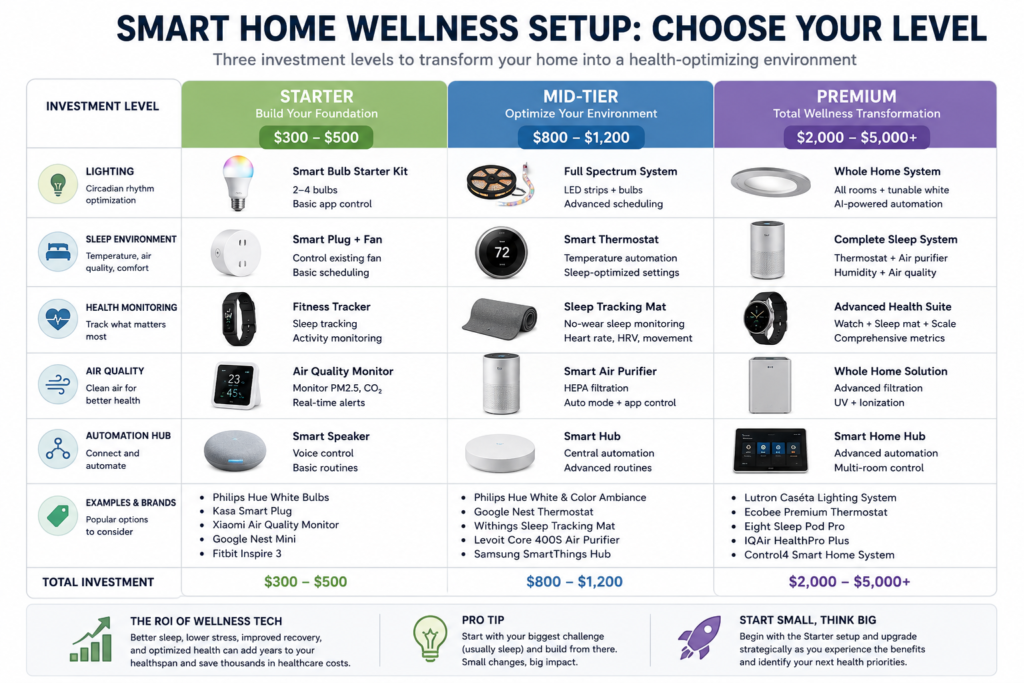
Complete budget breakdown:
| Priority | Budget | Recommended Products |
| Starter (under $500) | $300-500 | Smart light + basic smartwatch |
| Mid-tier ($500-1,500) | $800-1,200 | Quality smartwatch + lighting + air monitor |
| Premium ($1,500+) | $2,000-5,000 | All tech + brain wearables + integrated system |
The Future of Smart Home Wellness
As of August 2026, emerging trends in smart home wellness include:
AI-Powered Personalization
Systems that learn your unique biology and automatically optimize settings based on your genetics, chronotype, stress patterns, and health goals—no manual intervention required.
Digital Privilege as Status Symbol
In response to AI saturation, the ability to go offline without consequence is becoming the ultimate status symbol. Solar-powered e-ink watches and minimal-notification wearables are gaining popularity.
Preventive Medicine Integration
Smart home systems now integrate with wearable biomarkers to catch early signs of illness, hormonal imbalance, or cognitive decline—enabling preventive interventions before symptoms appear.
Microbiome Optimization
Emerging tech monitors circadian-aligned eating patterns (Bio-Harmony) and provides real-time feedback on food timing, supporting metabolic health and healthspan.
FAQs
Q1: Will smart home wellness tech actually improve my health?
A: The evidence is strong but individual. If you currently have circadian disruption (irregular sleep, artificial light exposure, irregular eating), you’ll see dramatic improvements. If your fundamentals are solid, improvements are more modest.
Q2: Do I need all of these technologies?
A: No. Start with one (usually daylight lighting or a smartwatch) and observe what creates the biggest improvement in your sleep, energy, or cognitive performance. Build from there.
Q3: Is smart home wellness tech just a luxury?
A: It’s becoming mainstream preventive medicine. In 2026, using smart home tech for circadian optimization is similar to how fitness tech became mainstream 10 years ago.
Q4: What about data privacy with health wearables?
A: This is a legitimate concern. Choose brands with strong privacy policies and avoid connecting all devices to the same central hub if that concerns you.
Q5: Can I get similar results without technology?
A: Yes, but technology makes it dramatically easier. You can manually align light exposure, but smart lights are automated. You can track sleep manually, but smartwatches do it continuously. Technology is a leverage tool, not a requirement.
Conclusion
Smart home wellness tech represents a fundamental shift in how we approach health—from reactive (treating illness) to proactive (optimizing healthspan). In 2026, this is no longer science fiction. These technologies are here, affordable, and evidence-based.
The evidence is clear:
- Circadian optimization adds years of quality health
- Brain health tech protects against cognitive decline
- Real-time health tracking enables data-driven decisions
- Integrated systems create exponential benefits
Your home can be your greatest health asset. The question isn’t whether to invest in smart home wellness tech, but which piece to start with.
Related reading
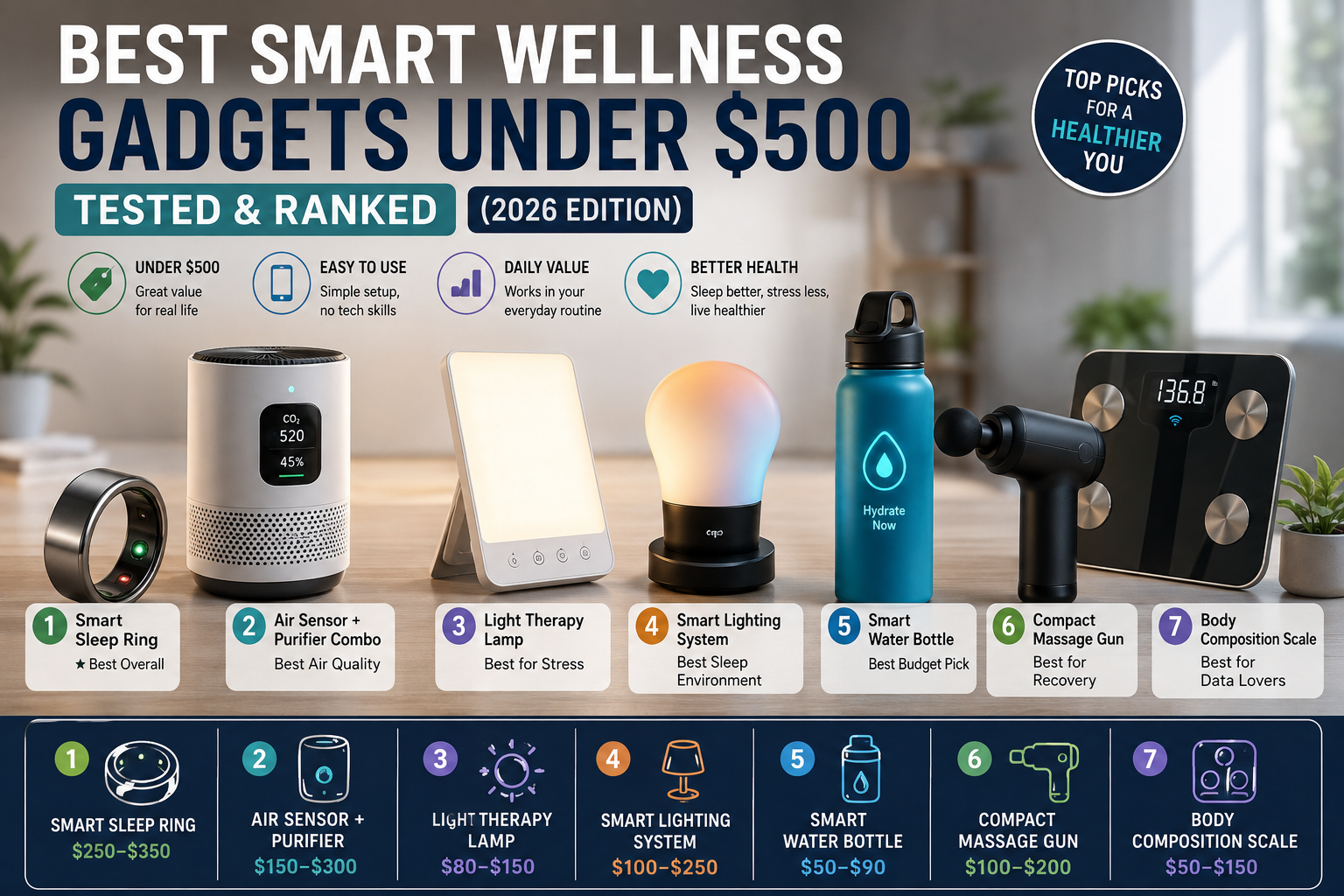
Best Smart Wellness Gadgets Under $500: Tested & Ranked (2026 Edition)
Wellness tech used to cost a fortune. In 2026, that is no longer true. You can now find smart wellness gadgets under $500 that track sleep,…
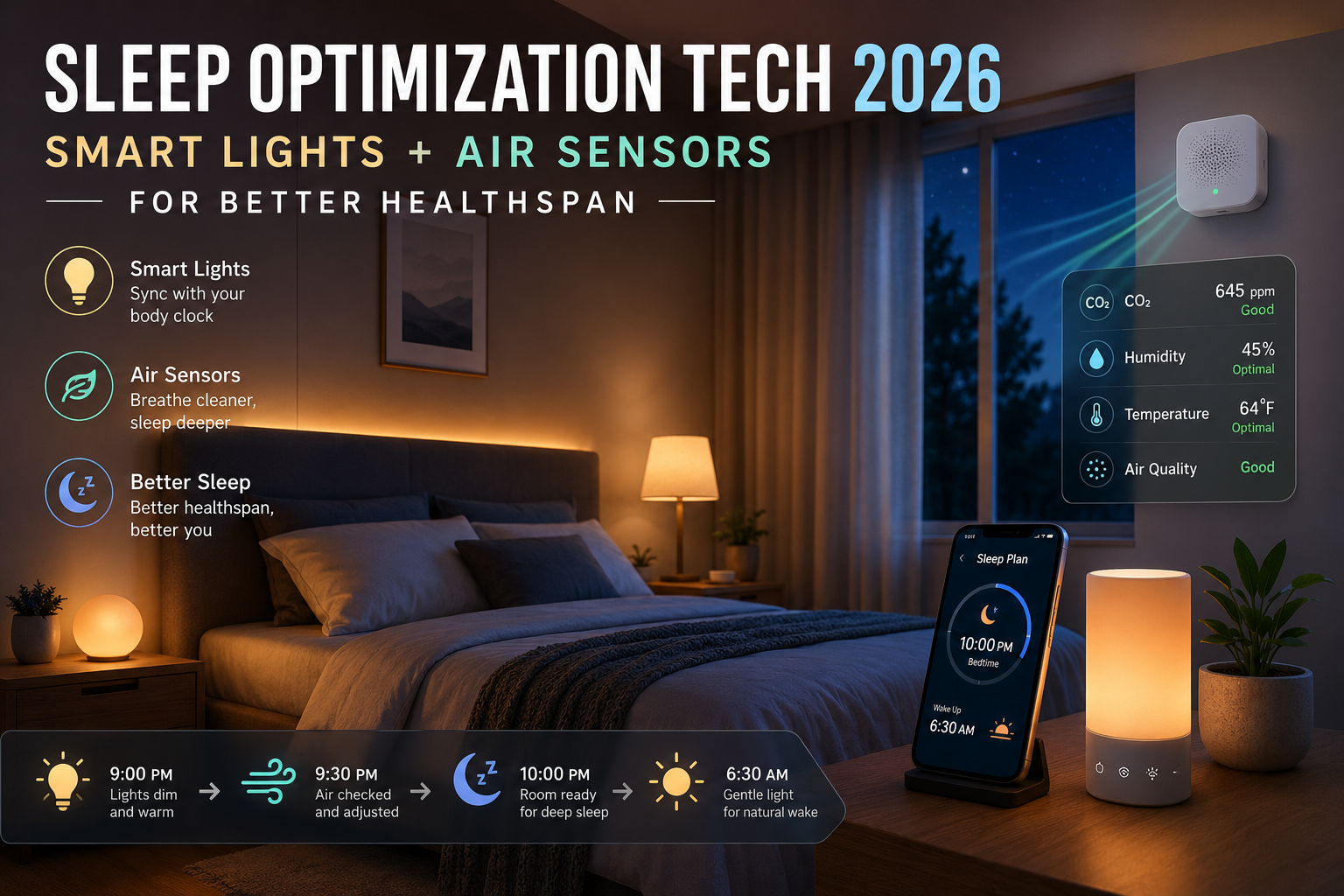
Sleep Optimization Tech 2026: Smart Lights + Air Sensors for Better Healthspan
Sleep is not just rest. It is one of the biggest parts of your health. Good sleep helps your brain, your heart, and your mood. Bad…