Sports Fitness Trends 2026: Smarter Training & Faster Recovery
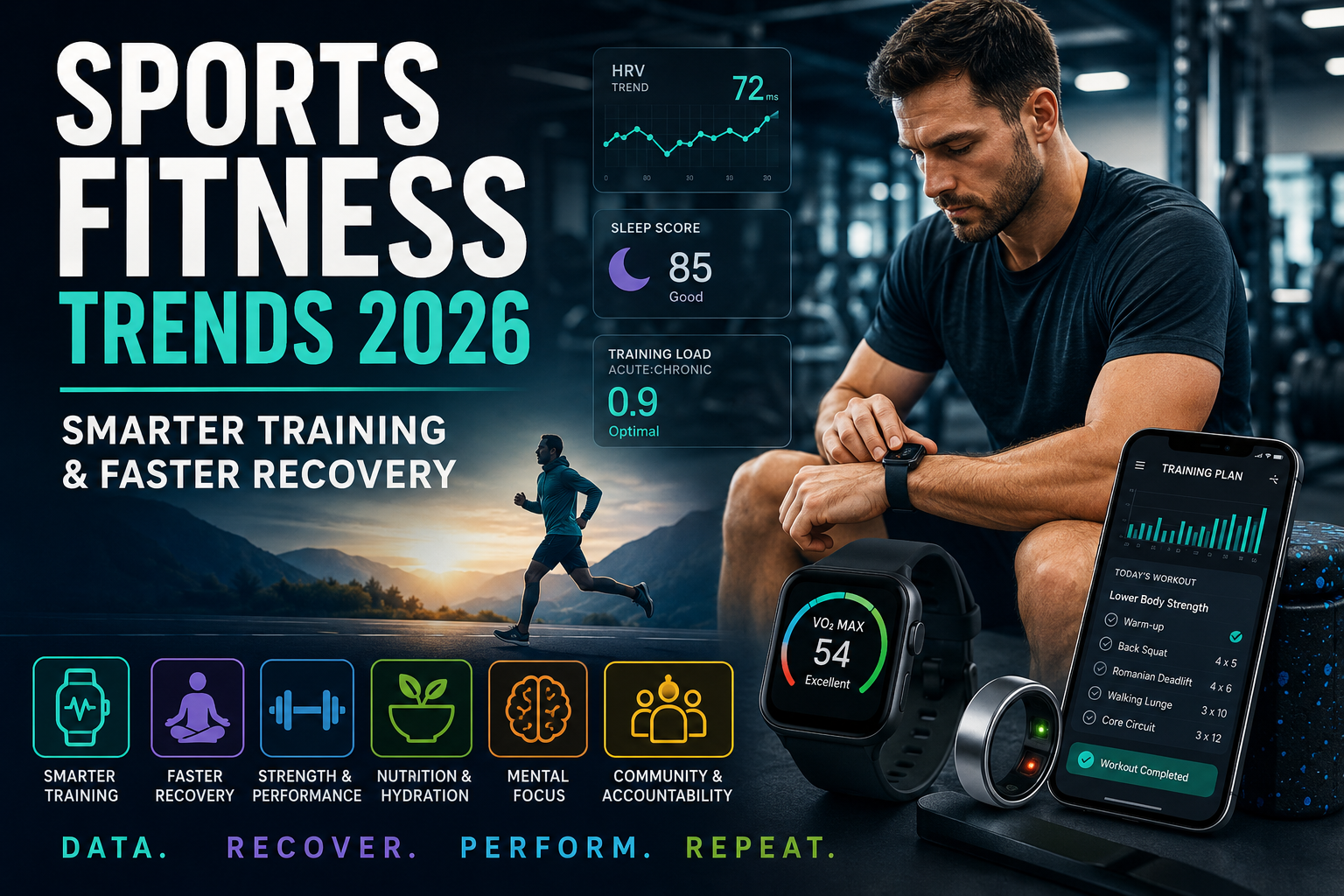
Fitness in 2026 doesn’t look like fitness in 2016 or even 2022. The loudest voices in gyms used to be the ones telling you to push harder, sleep less, and grind through pain. That era isn’t over, but it’s no longer running the show. The sports fitness trends of 2026 are being shaped by data, not dogma: heart rate variability readings, sleep scores, training-load ratios, and AI-adjusted programming are now sitting right next to the barbell.
This shift matters because the athletes and everyday exercisers who are actually improving right now aren’t necessarily the ones training the most hours. They’re the ones training smarter, recovering faster, and using feedback loops to make better decisions week over week. Whether you’re a competitive athlete, a weekend warrior, or someone who just started lifting again after a long break, the same three principles now apply: smarter inputs, faster recovery, better outputs.
This guide breaks down exactly what’s changed in exercise trends this year, what the data says, and how to build a training and recovery system that actually works grounded in current sports science and industry research rather than recycled gym-bro advice.
Why 2026 Is a Turning Point for Sports Fitness
Every year, the American College of Sports Medicine (ACSM) surveys thousands of exercise professionals, trainers, physiologists, clinicians, and coaches to identify the fitness trends actually shaping the industry, rather than what’s simply trending on social media. The 2026 edition of this survey, now in its 20th year, puts wearable fitness devices at the very top of the list for the third year running.
That’s not a coincidence. A significant share of adults now own some form of fitness tracker or smartwatch, and a large majority of them say they actively use that data to adjust how they train or recover, rather than treating it as a novelty. In other words, wearable data has stopped being a gimmick and started functioning as a genuine sports technology tool.
Right behind wearables on the 2026 trends list are fitness programs for older adults, exercise for weight management, mobile exercise apps, and programming focused on balance, flow, and core strength. Traditional strength training also continues to hold a strong position across the globe, and notably, adult recreational sport clubs cracked the global top 20 for the first time in the survey’s history, largely driven by the explosion of pickleball and a renewed appetite for social, group-based movement.
Both the World Health Organization and the CDC still anchor their public health guidance around the same baseline: roughly 150–300 minutes of moderate aerobic activity a week, plus muscle-strengthening work at least twice a week. None of 2026’s technology or trend shifts changes that baseline; they change how people hit it, track it, and stay consistent with it.
Put simply, 2026 fitness culture is defined by personalization (your data, your plan), technology integration (wearables, apps, AI), and a return to fundamentals (strength, mobility, and community), all working together instead of competing for attention.
This convergence also explains why so much of this year’s advice sounds less extreme than it used to. Fewer coaches are selling “no days off,” and more are talking about training load management, deload weeks, and sleep quality in the same breath as sets and reps. That’s not the industry going soft; it’s the industry catching up to what recovery science has been showing for years: consistent, well-recovered training beats sporadic, exhausting training almost every time.
Train Smarter: The New Rules of Effective Training in 2026
“Training smarter” isn’t a slogan; it’s a specific shift in how programs get built. Instead of following a static plan for 12 weeks regardless of how your body responds, smart training in 2026 adjusts based on real feedback. Here’s what that looks like in practice.
AI-Powered and Adaptive Training Programs
AI fitness coaching has moved well past generating a random list of exercises. The current generation of adaptive training apps builds a program around your specific goals and available equipment, then adjusts volume, intensity, and exercise selection based on how you actually perform each session, not just how the plan assumed you would perform.
Some platforms lean toward algorithmic strength programming that adapts set-by-set. Others pair an AI engine with a human coach in the loop, which tends to work better for people who want programming logic plus real accountability and context a bot can’t fully replace. The common thread across nearly all of them is the same: your training plan should react to your data, not ignore it.
A practical way to use this trend: if you’re using an AI-driven app, don’t just accept the workout it generates; pay attention to why it changed. If it lowers your squat volume after a rough night of sleep, that’s the system doing exactly what it’s designed to do.
Wearable Technology and Biometric-Guided Training
This is the single biggest shift in how serious exercisers approach sports performance in 2026. Wearable fitness devices—smartwatches, rings, and chest straps—now routinely track heart rate variability (HRV), resting heart rate trends, sleep stages, and training load and feed that data back into daily decisions about intensity.
Two concepts are worth understanding if you want to actually use this data instead of just staring at it:
- HRV (Heart Rate Variability): HRV measures variation in the time between heartbeats and can provide insight into autonomic nervous system status. Rather than treating a single reading as a readiness score, it’s more useful to monitor your own trend over time and consider it alongside sleep, fatigue, resting heart rate, and training performance.
- Acute-to-Chronic Workload Ratio (ACWR): This compares recent training load with a longer-term training-load history. Coaches sometimes use it as one part of workload monitoring, but the research has important methodological limitations, so ACWR should not be treated as a standalone injury predictor. A sudden increase in training load is better considered alongside recent training history, recovery, sport demands, and how the athlete is responding.
The practical takeaway: don’t just look at a single day’s HRV number in isolation. Coaches who use this data well typically look at a 3–5 day directional trend measured under consistent conditions (like first thing in the morning, lying down), cross-referenced with how you actually feel. A dip isn’t an alarm bell on its own; it’s a prompt to check in with your body before deciding whether to push or pull back.
It’s also worth knowing that wrist-based VO2 max and calorie estimates from consumer wearables typically carry a margin of error of roughly 10–15% compared with lab testing. They’re genuinely useful for spotting trends over weeks and months, far less reliable as a single, precise number.
Zone 2 Training and VO2 Max: Building the Aerobic Engine
Zone 2 generally refers to low-intensity aerobic exercise performed below the first lactate or ventilatory threshold, although exact heart-rate definitions vary between testing and training systems. In practical terms, it should feel easy enough that you can maintain a conversation without significant breathlessness. This type of training can contribute to aerobic fitness while producing relatively little fatigue, making it useful for accumulating training volume.
The most effective structure for most people combines both ends of the intensity spectrum rather than picking one:
- A common polarized-training model places roughly 75–80% of training at low intensity and 15–20% at moderate-to-high intensity, although the ideal distribution depends on the athlete, sport, training phase, and total workload.
This “polarized” 80/20 approach avoids the common trap of training constantly at a moderate, “medium-hard” pace that’s too easy to build real aerobic capacity and too hard to recover from quickly. For strength and power athletes, even 2–3 short Zone 2 sessions a week can meaningfully improve recovery capacity between hard training days, which is exactly why this trend has spread well beyond endurance sports.
Functional and Hybrid Strength Training
Traditional strength programming hasn’t gone anywhere; if anything, it’s more central than ever, ranking consistently in the top tier of global fitness trends. What’s changed is how it’s being combined with other modalities.
Functional fitness training movement patterns like squatting, hinging, pushing, pulling, carrying, and rotating, rather than isolated muscles, remain a dominant approach because they translate directly into real-world capability and athletic performance, not just how you look. Hybrid training programs that blend strength work with conditioning, mobility, and skill-based movement (think CrossFit-style circuits or app-based obstacle simulations) continue to grow because they build both practical strength and cardiovascular capacity in the same session.
For most people building a program in 2026, a sensible split looks like
- 2–4 strength sessions per week built around compound, functional movements
- 1–3 conditioning sessions (Zone 2, intervals, or sport-specific cardio)
- Dedicated mobility and core work woven into warm-ups rather than treated as an afterthought
A functional strength session doesn’t need to be complicated to be effective. A simple template might include a squat or hinge pattern (back squat, trap-bar deadlift), a push and pull movement (overhead press, row), a single-leg or rotational exercise for stability, and a loaded carry to finish. That combination hits nearly every movement pattern the body actually uses in sport and daily life, which is exactly why it has stayed relevant even as training fads have come and gone.
Mobility, Prehab, and Injury Prevention
Balance, flow, and core strength programming: think controlled mobility work, rotational stability drills, and yoga-influenced flows have climbed the trend rankings because they directly support injury prevention while supporting the other things people actually want: better posture, less pain, and longer training careers.
The mindset shift here is important: mobility and prehab work isn’t a “nice to have” tacked onto the end of a session. It’s increasingly treated as programmed training in its own right, especially for anyone managing a demanding strength or conditioning load. A 10-minute prehab block focused on your specific weak points (ankles, hips, shoulders, and thoracic spine) is far more valuable than an extra set of an exercise you’re already good at.
Recover Faster: Building a Recovery System That Actually Works
If 2026 has a defining fitness philosophy, it’s this: rest is part of training, not a break from it. Muscles don’t get stronger during your workout; they get stronger during the repair process afterwards. That reframe is driving one of the biggest shifts in how serious athletes structure their weeks, and it’s central to modern recovery science.
Sleep as the Foundation of Recovery
No recovery tool—cold plunge, sauna, compression boots, or supplements—comes close to the impact of consistent, high-quality sleep. Sleep is when the nervous system regenerates, growth hormone release peaks, and the body consolidates the adaptations your training session actually triggered.
Sleep optimization for athletes in 2026 goes beyond “get 8 hours.” It increasingly includes:
- Tracking sleep stages (deep, REM, light) via wearables to spot patterns, not just total duration
- Keeping a consistent sleep and wake time, even on rest days
- Treating a sustained sleep disruption as an early warning sign of overtraining, often showing up before performance actually drops
If you only adopt one piece of 2026’s recovery science, make it this one. Everything else on this list is a multiplier on good sleep, not a substitute for it.
Recovery Technology: Cold, Heat, and Compression
Sports recovery techniques built around temperature and pressure have moved from elite locker rooms into mainstream gyms and even home setups. The main tools worth understanding:
- Cold plunge/cryotherapy: Can help reduce perceived muscle soreness and support short-term recovery, although the ideal timing and protocol depend on the type of training and the athlete’s goals.
- Infrared sauna and heat exposure: Uses gentle, penetrating heat to relax muscles, improve blood flow, and trigger heat-shock proteins that support cellular repair. Many athletes now alternate heat and cold in the same recovery session for a broader effect.
- Compression therapy: Pneumatic compression garments and boots support lymphatic drainage and reduce swelling, which is particularly useful after high-volume training blocks or travel.
- Percussive therapy (massage guns): Increases local blood flow and can reduce the perception of soreness, making it a useful, if lower-impact, addition to an athlete’s recovery toolkit.
None of these tools works as a substitute for sleep, nutrition, or smart programming; they’re accelerants, not replacements. The athletes getting the most value from them aren’t using every tool every day; they’re matching the tool to the specific type of fatigue they’re dealing with.
Nutrition and Hydration for Recovery
Recovery nutrition in 2026 is less about a single “magic window” and more about consistency across the day:
- Protein distribution: Spreading adequate protein intake across 3–4 meals supports muscle repair better than trying to hit a number in one sitting.
- Carbohydrate replenishment: Especially important after high-volume or high-intensity sessions to restock glycogen and support next-day performance.
- Hydration and electrolytes: Often overlooked, but even mild dehydration measurably impairs both physical performance and next-day recovery markers like HRV.
This is a general framework, not a prescription; specific needs vary widely by sport, body size, and training volume, so it’s worth working with a sports dietitian or your own tracked data if you’re training at a competitive level.
Timing matters less than most people assume, but total daily intake matters more. An athlete who hits their protein and calorie targets across the day but misses the narrow “anabolic window” popularized years ago will still recover well. An athlete obsessing over that window while under-eating overall will not. If you only change one thing about recovery nutrition this year, make it consistency across meals rather than precision around a single post-workout shake.
Active Recovery and Mental Recovery
Complete rest isn’t always the fastest route back to full readiness. Low-intensity movement, walking, easy cycling, swimming, or a gentle mobility flow (this doubles as extra Zone 2 volume) keeps blood flowing to fatigued tissue without adding meaningful training stress.
Mental recovery deserves equal billing. Chronic stress raises cortisol and can blunt the very recovery processes physical tools are trying to support. Simple, low-cost practices—a wind-down routine before bed, brief breathing exercises, or short periods of genuinely unplugging from training data—help close the loop between physical and mental fatigue.
Perform Better: Turning Training and Recovery Into Results
Training smarter and recovering faster only matter if they translate into actual performance optimization: a faster time, a heavier lift, fewer injuries, or simply feeling capable in your sport. Here’s how the pieces come together.
Periodization for Peak Performance
Periodization, structuring training in deliberate phases rather than doing the same thing every week, remains the backbone of any serious athletic performance plan. A simple version most people can use:
- Base phase: Higher volume, moderate intensity, building general work capacity
- Build phase: Intensity increases, volume tapers slightly, and work becomes more specific to your goal
- Peak phase: Volume drops further, intensity stays high, focus shifts to sharpness and readiness
- Deload/recovery phase: A deliberate lighter week to let fatigue dissipate before repeating the cycle
What’s changed in 2026 is how these phases are increasingly adjusted in response to wearable and performance data, rather than following a fixed calendar. If your training-load ratio is climbing too fast, a deload might get pulled forward. If your HRV trend is strong and stable, the peak phase might be slightly extended.
Sports Nutrition and Fueling Strategy
Sports nutrition in 2026 continues to move toward individualization rather than one-size-fits-all macros. Continuous glucose monitoring, once mostly used in clinical settings, is increasingly used by endurance athletes to fine-tune carbohydrate timing around training and competition. For strength and power athletes, the focus tends to be on adequate total protein intake, sufficient calories to support training volume, and strategic carbohydrate timing around the hardest sessions of the week.
The bigger shift is behavioral: fueling is being treated as a performance lever, not just a body-composition tool. Under-fueling to chase a leaner look is increasingly recognized as one of the fastest ways to blunt strength gains, delay recovery, and increase injury risk, a pattern sports dietitians and coaches are actively working to correct.
Technology for Tracking Real Performance
Beyond wearables focused on recovery, a separate layer of smart fitness technology is increasingly used to measure performance itself: GPS units tracking speed and distance for field-sport athletes, velocity-based training devices measuring bar speed during lifts, and simple smartphone video analysis for checking form on key lifts or movement patterns.
None of this requires an elite budget. A phone propped up during a squat session, reviewed afterwards for depth and bar path, delivers a meaningful chunk of the same benefit a motion-capture lab used to provide exclusively to professional athletes. The broader point of 2026’s performance-tracking trend isn’t the specific device; it’s the habit of checking objective output against subjective effort, so you can tell the difference between a session that felt hard and a session that actually produced a better result.
Sports Psychology and Mental Performance
Sports psychology has firmly entered mainstream training conversations rather than staying confined to elite programs. Visualization, structured self-talk, pre-performance routines, and simple breathing techniques to manage competition anxiety are now commonly built into training plans for athletes at every level, not just professionals.
Mental performance and physical recovery are increasingly treated as connected, not separate: an athlete who’s mentally burnt out often shows physical recovery markers (like suppressed HRV) even without a hard physical training block. Coaches who track both tend to make better decisions about when to push and when to genuinely back off.
Community, Accountability, and Adherence
One of the more surprising findings in 2026 fitness data is the rise of adult recreational sport clubs and group activities like pickleball, running clubs, and recreational leagues climbing into the global top 20 trends for the first time. The reason is simple: the best training plan is the one you actually stick to, and social accountability is one of the most reliable adherence tools available.
If you’ve struggled to stay consistent with solo training, this trend is worth taking seriously. Pairing structured individual training with a social, group-based activity even once a week measurably improves long-term consistency for a lot of people, regardless of how optimized the rest of their program is.
Top Sports Fitness Trends to Watch in 2026
- Wearable fitness devices: Smartwatches, rings, and biosensors tracking HRV, sleep, heart rhythm, and VO2 max
- AI-adaptive training apps: Programs that adjust based on real performance and recovery data
- Fitness programs for older adults: Resistance and balance training aimed at preserving independence
- Data-driven training technology: Load monitoring, training-load ratios, and readiness scoring
- Zone 2 and polarized training: Renewed focus on aerobic base-building alongside high-intensity work
- Functional and hybrid strength training: Blending strength, conditioning, and mobility in one system
- Recovery technology: Cold plunge, infrared sauna, compression therapy, percussive massage
- Balance, flow, and core programming: Mobility and stability work as a standalone training focus
- Adult recreation and social fitness: Pickleball, run clubs, and group-based accountability
- Sports psychology integration: Mental performance training built into everyday programming
- Individualized sports nutrition: From continuous glucose monitoring to personalized fueling windows
Adjust the specifics to your sport and goals, but keep the underlying logic: hard days are followed by genuine recovery, not just “less hard” days, and at least one day each week is built around social movement rather than pure performance metrics.
Common Mistakes to Avoid in 2026
- Chasing every metric at once. Trying to optimize HRV, sleep score, steps, protein, and training load simultaneously often leads to paralysis. Pick one or two data points that matter most for your goal and build from there.
- Ignoring subjective feedback in favor of the number. A device reading is a data point, not a verdict. How you actually feel still matters.
- Using recovery tools to mask poor sleep or under-recovery, not fix it. A cold plunge won’t undo three nights of five hours of sleep.
- Skipping deload weeks because “it feels like slacking.” Planned lighter weeks are what make the following training block productive.
- Under-fueling to look leaner. This consistently backfires on strength, recovery speed, and injury risk.
- Training alone indefinitely with no social or accountability layer. It’s one of the most common and most fixable reasons people fall off a program.
- Training only at “medium” intensity. Skipping true easy days (Zone 2) and true hard days in favor of a constant moderate pace is one of the most common reasons endurance progress stalls.
FAQs
1. What is the biggest sports fitness trend in 2026?
Wearable technology holds the top spot for the third consecutive year in ACSM’s global trends survey, driven by devices that now track heart rate variability, sleep, blood pressure, and even fall detection well beyond simple step counting.
2. How can I train smarter without buying expensive gear?
You don’t need a wearable to train smarter. Track your sessions, note how you sleep and feel each morning on a simple 1–5 scale, and adjust intensity based on that pattern. The principle of responding to real feedback instead of a fixed plan matters more than the specific tool.
3. How much does recovery actually affect performance?
Significantly. Under-recovery is one of the most common reasons training plateaus, even when the training itself is well-designed. Sleep, in particular, is consistently linked to muscle repair, hormone regulation, and next-day performance readiness.
4. Is HRV tracking worth it for non-elite athletes?
Yes, with realistic expectations. HRV trends (measured over several days, not a single reading) can help recreational exercisers spot early signs of overtraining or under-recovery, which is useful at any training level, not just for professional athletes.
5. What is Zone 2 training, and do I need a wearable to do it?
Zone 2 is low-intensity aerobic training at roughly 60–70% of max heart rate, easy enough to hold a conversation. A heart rate monitor makes it precise, but the “talk test” (can you speak in full sentences?) works as a reasonable substitute if you don’t have one.
6. Do I need an AI coaching app to train effectively in 2026?
No. AI-adaptive apps are a convenience layer, not a requirement. A well-structured written program combined with honest tracking of your own performance and recovery can produce the same results; the app just automates the adjustments a good coach (or a disciplined self-coached athlete) would make anyway.
7. How often should I take a deload week?
There is no universal deload schedule. Many athletes use planned lighter periods based on accumulated fatigue, performance, training phase, or recovery. If HRV trends are dropping, sleep quality is declining, or performance is stalling despite good effort, that can be a signal to reduce training load rather than waiting for the calendar.
Conclusion
Sports fitness in 2026 isn’t about a single new exercise or gadget; it’s about a mindset shift. Training smarter means letting real feedback, not just a fixed plan, guide your intensity. Recovering faster means treating sleep, nutrition, and recovery tools as part of training, not an afterthought. And performing better is simply what happens naturally when the first two are actually working together.
You don’t need every wearable, every recovery tool, or a fully AI-managed program to benefit from this shift. Start with the fundamentals: consistent sleep, a smart training split, honest tracking of how you feel, and layer in technology where it genuinely earns its place. That’s what training smarter really looks like in 2026.
Related reading
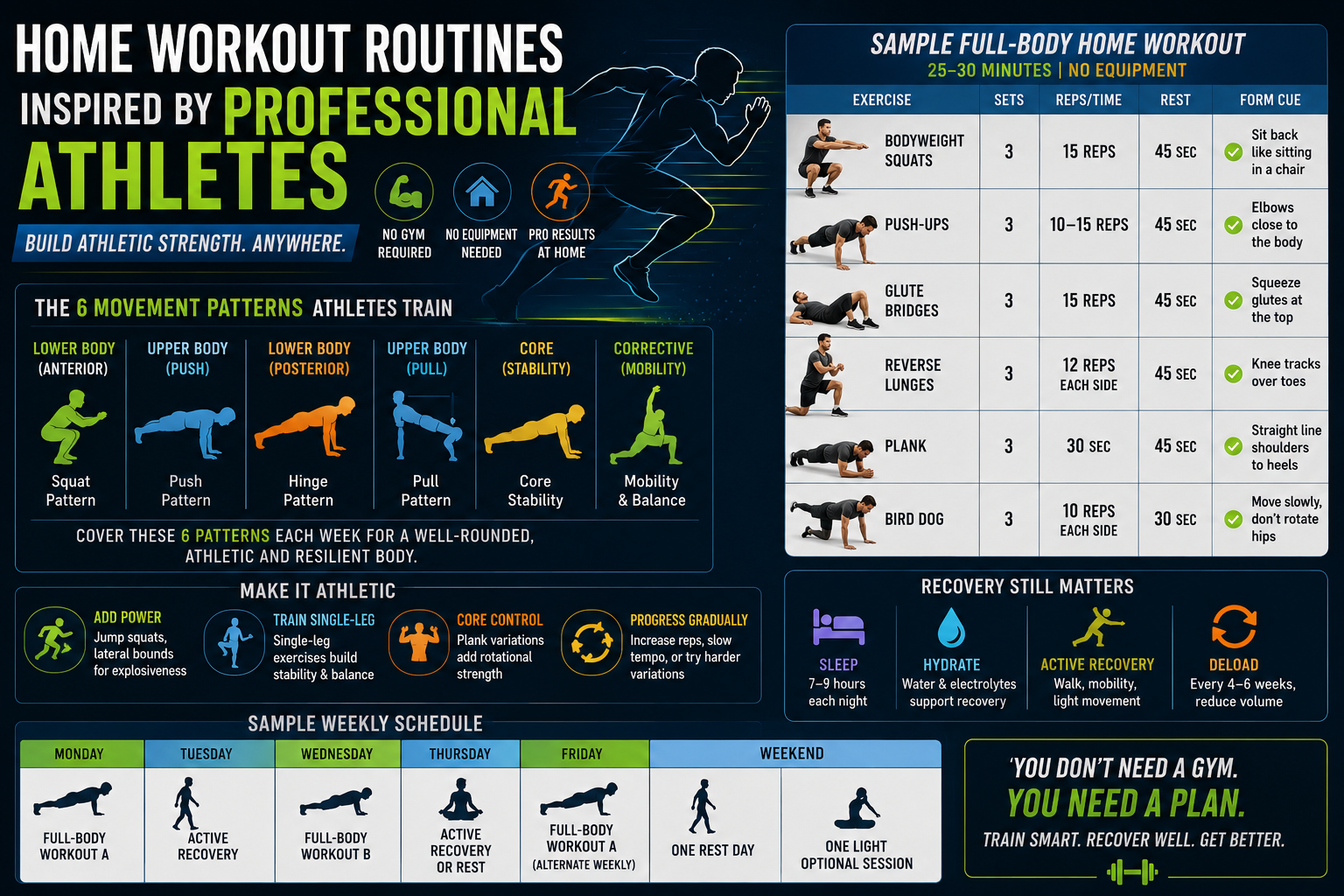
Home Workout Routines Inspired by Professional Athletes
Professional athletes train with purpose. Every sprint, jump, lift, and recovery session helps them perform better on the field or court. You can bring the same…
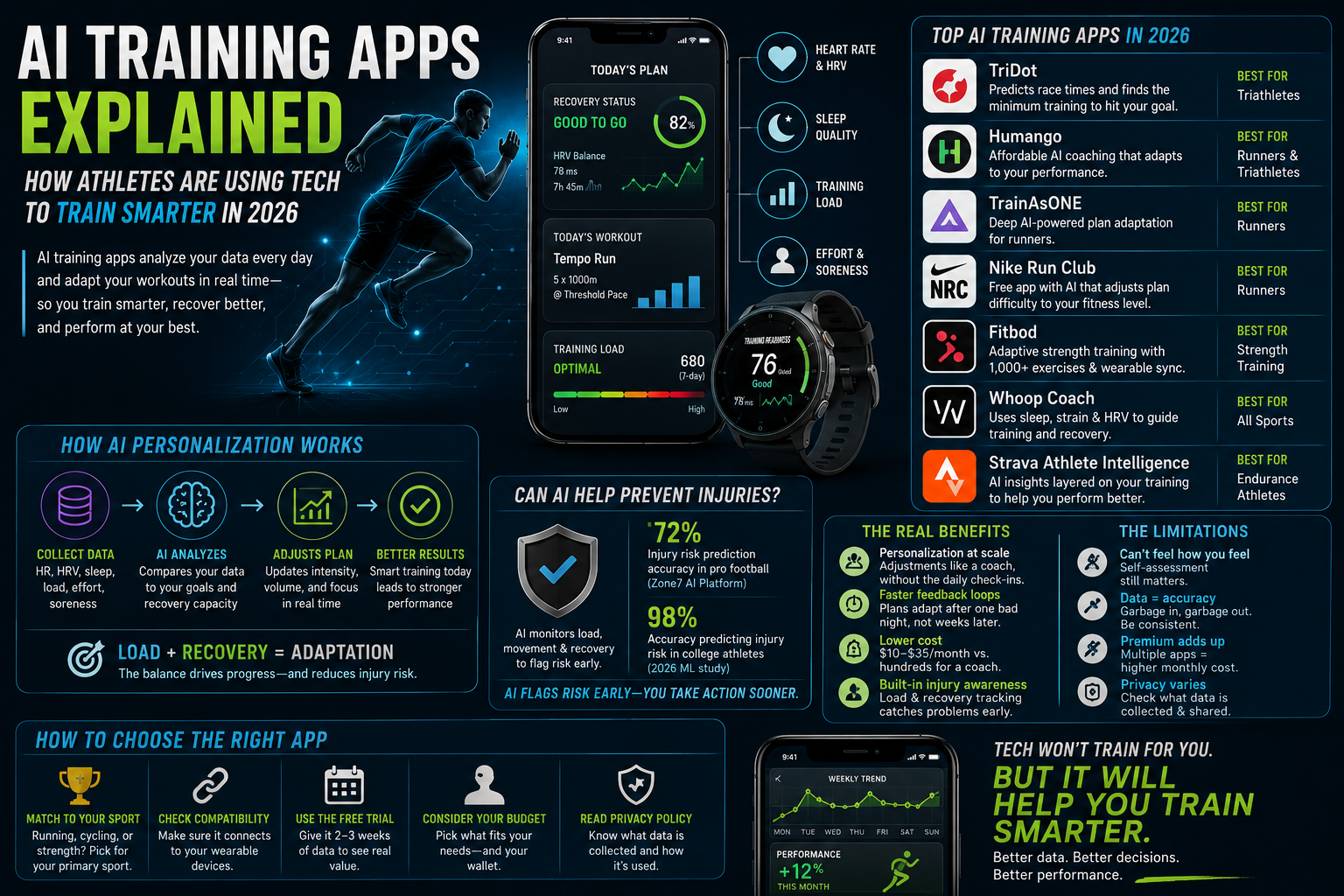
AI Training Apps Explained: How Athletes Are Using Tech to Train Smarter
Athletes used to train off a printed plan and a stopwatch. That plan didn’t know if you slept badly, missed a session, or showed up already…