Best Fitness Wearables for Athletes in 2026: Do They Really Help Performance, or Is It Just Hype?
Fitness gadgets are basically everywhere in 2026, like all over the place; you can’t really miss them. Watches, rings, and even smart vests now track almost everything about your body, or at least they claim to. But one question keeps popping up: Do these gadgets actually make you a better athlete? Or are they just expensive step counters with better branding?
More athletes than ever are strapping on some kind of tracker before every session. Some people swear by the data, like it’s a coach that never sleeps. Others say it’s all hype and marketing, and honestly they might not be wrong. The truth seems to sit kind of in the middle, and it mostly depends on how the device is used in real training life.
So let’s start with the top picks this year. Then let’s see what the science says, not the ads.
The Best Wearables for Athletes Right Now (like, today)
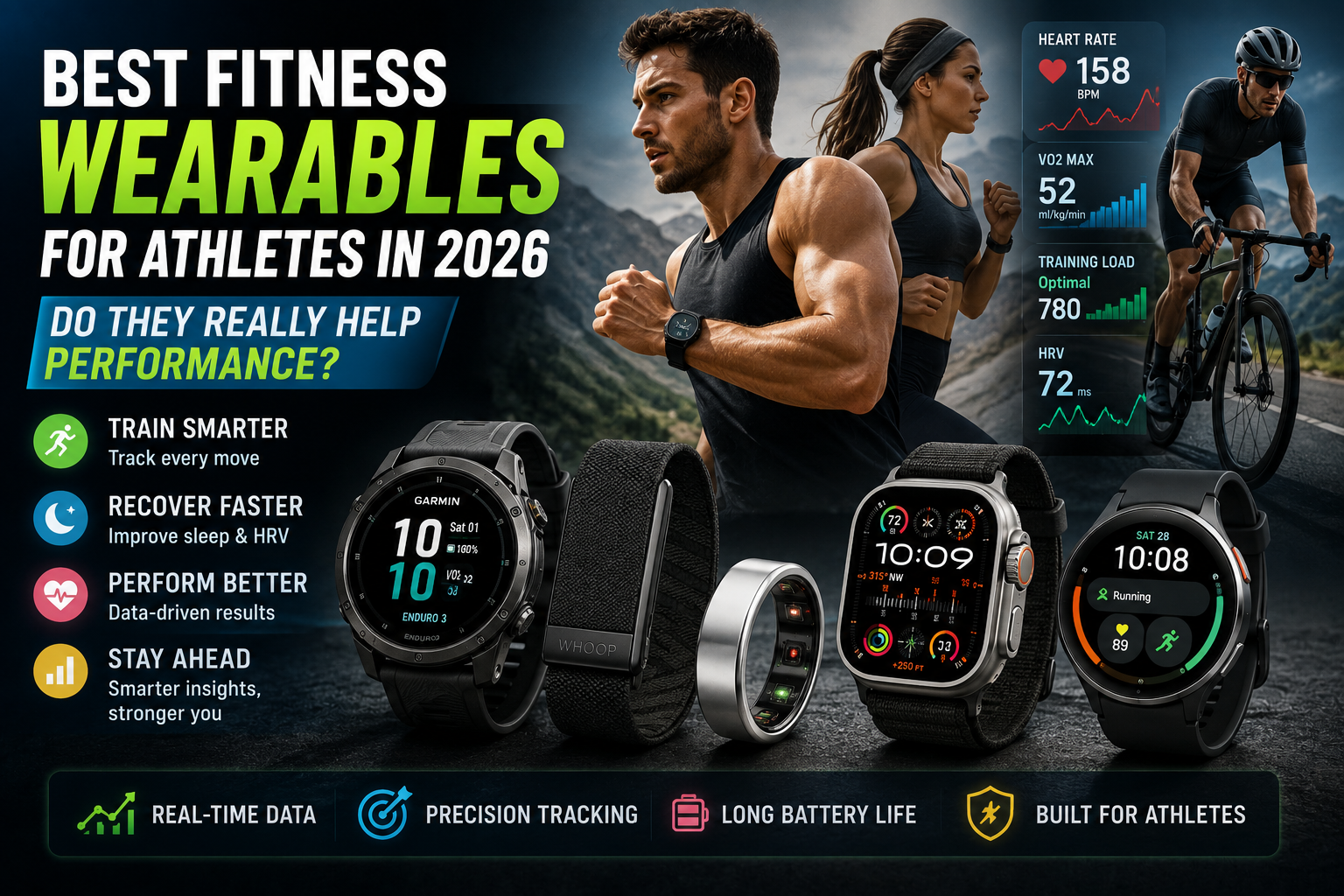
Garmin Forerunner and Enduro Series: Garmin is still a safe bet if you are a serious athlete. The Forerunner 265 feels rugged, and it is built for endurance training. The Enduro 3 takes it further, with a massive battery made for ultra-distance events. Runners, cyclists, and triathletes tend to rely on Garmin for solid GPS and a deep pile of training data.
Whoop is different; it pretty much skips the screen completely. It leans into recovery, strain, and sleep, like that is the whole point. Its Strength Trainer feature tracks reps, sets, and time under tension. So it becomes popular with lifters who want to dodge overtraining by staying a bit more in control.
- Oura Ring 5: Oura still leads for sleep tracking. The Ring 5 checks sleep stages, heart rate variability, and body temperature during the night. A lot of athletes now run it alongside a watch, because the ring handles recovery, while the watch is more about the workout, you know.
- Apple Watch Ultra 2: Apple’s Ultra 2 is designed to be tough, with a bright display and long-lasting battery life. The dual-frequency GPS helps athletes train outdoors, even when the signal gets weird, like in forests or canyons.
- Samsung Galaxy Watch 8: Samsung’s latest watch brings strong sleep tracking plus quick body composition scans. It also blends into daily life, not only training sessions. Which matters if you wear it all day, instead of just during workouts.
So yeah, each device has its own rhythm. The “best” pick depends on your sport, your budget, and what you’re actually trying to improve.
What the Research Actually Says
Scientists have looked at wearables pretty closely, and the results are kind of overall encouraging.
Some studies find that heart rate and “power” readings can help cyclists sharpen their lactate threshold. That’s the moment when the body starts to run out of energy faster than it can bounce back. When athletes know that value, they often train in a more precise way, not just go harder.
Other work suggests wearables also nudge motivation. People seem to move more when they can actually see their own progress, right there in real time. And somehow, the act of tracking becomes a little push toward steadier activity.
Wearables can also support recovery. Devices that log sleep and heart rate variability give athletes a sharper sense of how prepared their body is for the next session. In research with tennis players, those using wearable-guided insights during practice showed better cardiorespiratory fitness and also lower stress levels compared to players who trained without that information.
Injury prevention is another topic people keep circling back to. Some devices monitor movement patterns, and they may alert athletes about awkward form or an unusually high training load. That could reduce injury risk, but researchers mostly agree that more long-term evidence is still needed.
The Catch: Wearables Are Not Perfect
Ok, so here’s the honest part: wearables can be useful, but they are kind of far from flawless or whatever.
For one, calorie burn estimates are often a bit wrong. A bunch of studies say they can be off by 20 to 30 percent, and then it gets worse during weight training, swimming, or yoga, because movement is trickier and sensors have a harder time keeping up.
Heart rate readouts can also wobble when effort gets intense. Wrist motion, skin tone, and how tightly you have the device on can all shift accuracy. Usually chest strap monitors are more dependable for hard, high-paced sessions.
And there’s a mental side too. Too much data can turn into stress instead of encouragement. Some athletes begin chasing numbers rather than tuning in to their body, and then it can bring unnecessary anxiety, especially when the wearable throws out a weak “recovery score,” but it doesn’t really say clearly why.
Cost is another piece. Stuff like Whoop and Oura needs paid subscriptions to get the full set of features. Over a full year of training, that small monthly fee turns into a real chunk of money.
Battery life matters as well. A watch that blanks out mid-race—well, that’s basically useless. If someone is training for long events like marathons or triathlons, they should check battery specs carefully before they buy.
Do Wearables Actually Improve Performance?
The honest answer is sometimes, and only if you use them the right way.
Wearables don’t make you faster or stronger just by sitting on your wrist. They don’t grow muscle or raise your VO2 max by themselves. What they do is offer you information, a stream of context. And that info only helps when you do something with it, not just look at it.
Think of a wearable like a mirror. It shows you what’s going on inside your body. It doesn’t “fix” the problem for you, not even a little. A runner or athlete who uses the data to rest more, train smarter, and catch early warning signals of overtraining will probably see real improvements. But an athlete who tunes out how they feel and only chases the numbers on the device may not improve much at all.
Coaches usually land on the same idea. The data can back up better decisions. It doesn’t replace genuine coaching, proper recovery, or a good training plan shaped around the individual athlete.
How to Get the Most Out of Your Wearable
- Use it to spot trends over weeks, not to obsess over daily numbers; it sounds small, but it matters.
- Try pairing recovery data like sleep and HRV with how your body really feels in the moment.
- Think of calorie numbers as rough estimates, not as exact science or some perfect verdict.
- Wear the device snugly and correctly, because a sloppy fit can mess up readings.
- Also, talk with a coach or trainer about how to interpret your training load data; don’t just stare at charts.
FAQs
1. Do fitness wearables improve athletic performance?
Not directly. They do not build muscle or improve fitness. They provide data on training, recovery, and sleep. Athletes improve by using this data wisely.
2. What is the best fitness wearable for athletes in 2026?
It depends on the sport. Garmin Forerunners and Enduros are great for endurance athletes. Whoop and Oura Ring 5 focus on recovery and sleep. Apple Watch Ultra 2 and Samsung Galaxy Watch 8 offer both fitness and smartwatch features.
3. How accurate are calorie estimates?
They are not very accurate. Most trackers can be off by 20–30%. Errors can be higher during weight training, swimming, or yoga. Treat calorie numbers as estimates.
4. Is a chest strap more accurate than a wrist monitor?
Usually, yes. Chest straps work better during hard workouts. Wrist sensors can be affected by movement and fit. Chest straps measure the heart’s electrical signals directly.
5. Are Whoop and Oura subscriptions worth it?
It depends on the athlete. Both require subscriptions for full features. They can be useful for athletes who track sleep, HRV, and strain. Casual users may prefer a watch with no subscription.
6. Can fitness trackers help prevent injuries?
Possibly. Some trackers monitor training load and movement. They can flag unusual changes. However, more research is needed.
7. Do athletes need a smartwatch and an Oura Ring?
No. One device is enough for most athletes. A ring is better for recovery and sleep. A watch is better for GPS, pace, and live workout data.
8. How often should athletes check recovery scores?
Once a day is enough. Do not rely on one score. Look at trends over several weeks. Watch changes in sleep, HRV, and training load.
Conclusion
Fitness wearables in 2026 are way more advanced than ever before, and honestly it feels a bit unreal. Garmin, Whoop, Oura, Apple, and Samsung all bring strong tools for tracking training, recovery, and general health. A lot of the science supports real benefits, from steadier motivation to smarter recovery planning.
But the truth is, it’s kind of simple. Wearables are tools, not magic. They can improve performance, yes, but only when they’re paired with good habits, sensible training, and honest self-awareness. The best athletes in 2026 aren’t necessarily the ones with the fanciest gadget. They’re the ones who actually know how to use their data and adjust when something feels off.
Related reading
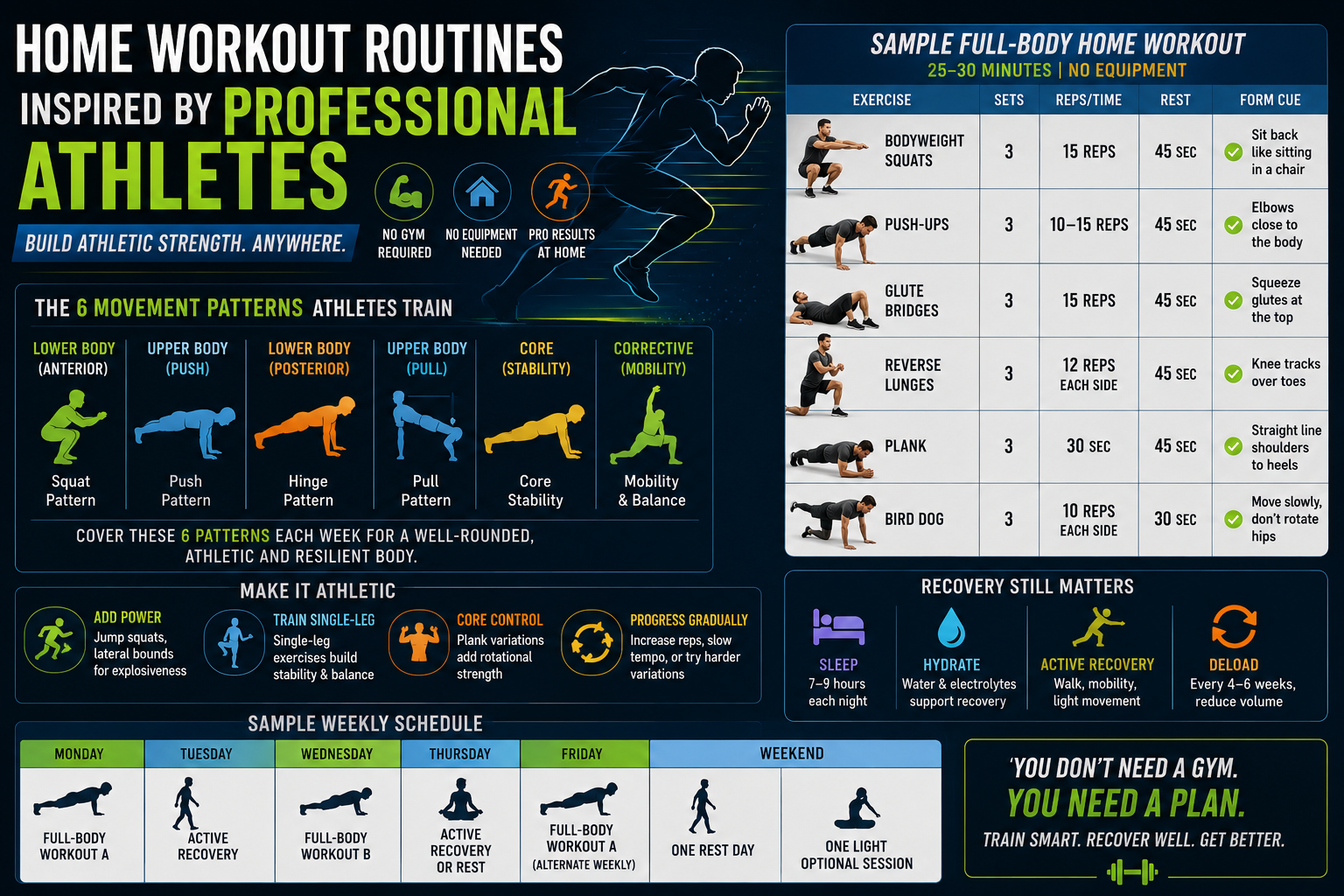
Home Workout Routines Inspired by Professional Athletes
Professional athletes train with purpose. Every sprint, jump, lift, and recovery session helps them perform better on the field or court. You can bring the same…
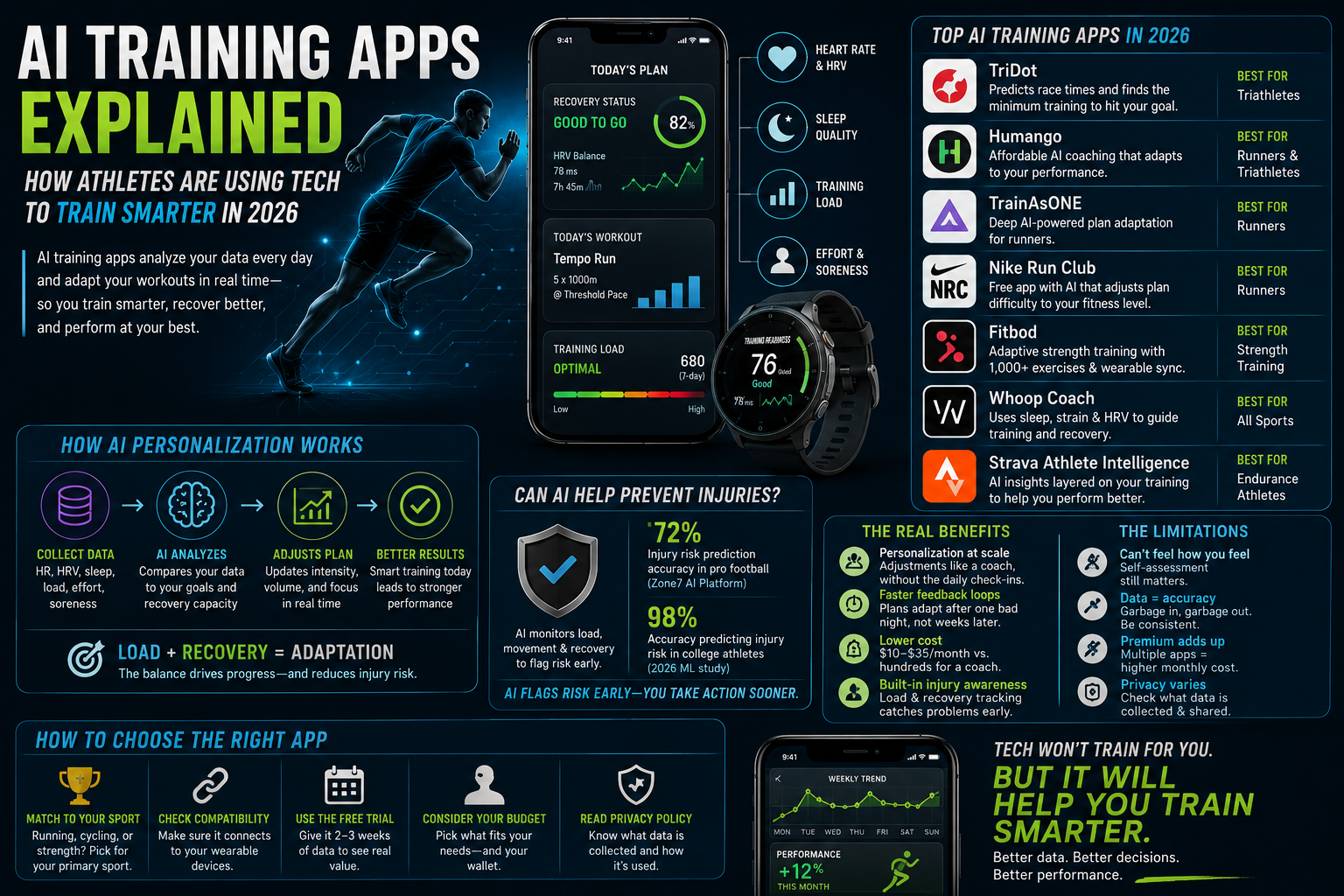
AI Training Apps Explained: How Athletes Are Using Tech to Train Smarter
Athletes used to train off a printed plan and a stopwatch. That plan didn’t know if you slept badly, missed a session, or showed up already…