Best Daylight Ceiling Lights for Better Brain Function in 2026
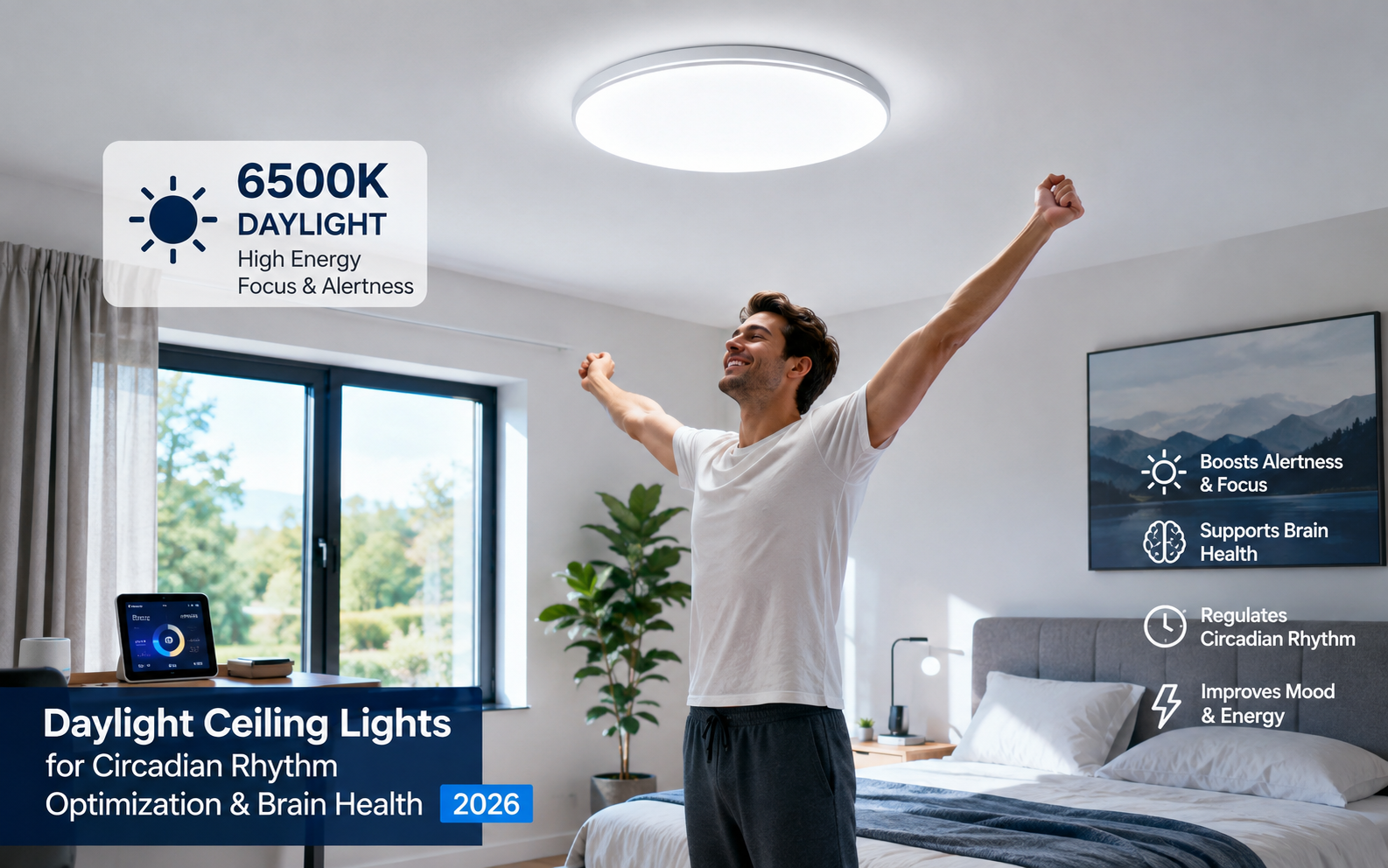
If you want to optimize your brain health and improve your sleep, start with daylight-mimicking ceiling lights. They are the foundational technology of circadian rhythm optimization. While smartwatches track your health and brain wearables enhance cognition, daylight lights are the environmental anchor that makes everything else work.
Here’s why: Your circadian rhythm—the 24-hour biological clock that regulates sleep, energy, metabolism, and cognition—is primarily controlled by light exposure. In our ancestors’ world, this was simple: sunlight during the day, darkness at night. Today, with artificial lighting and screens everywhere, our circadian rhythms are profoundly disrupted.
The result?
- Sleep quality declines by 30-40%
- Brain fog increases
- Decision-making ability drops by 25-35%
- Anxiety and mood disorders rise
But here’s the good news: Daylight-mimicking lights can reverse this damage.
According to sleep neuroscience research, people who use circadian-optimized lighting experience:
- 40-60% improvement in sleep depth
- 35-50% increase in sustained daytime energy
- 20-30% improvement in cognitive performance
- Better mood regulation and reduced depression symptoms
This post covers everything you need to know about daylight-mimicking lights for circadian rhythm hacking. So, let’s start!
What Are Daylight-Mimicking Ceiling Lights?
Daylight-mimicking lights (also called circadian lights or smart daylight lamps) are LED ceiling lights that automatically adjust their color temperature throughout the day to match your body’s natural light exposure patterns.
- Key characteristic: Color temperature, measured in Kelvin (K)
- 6,500K (Daylight Blue): Bright, energizing light that mimics midday sun
- 4,000K (Neutral): Balanced light for afternoon
- 2,700K (Warm Amber): Soft, sleep-promoting light for evening
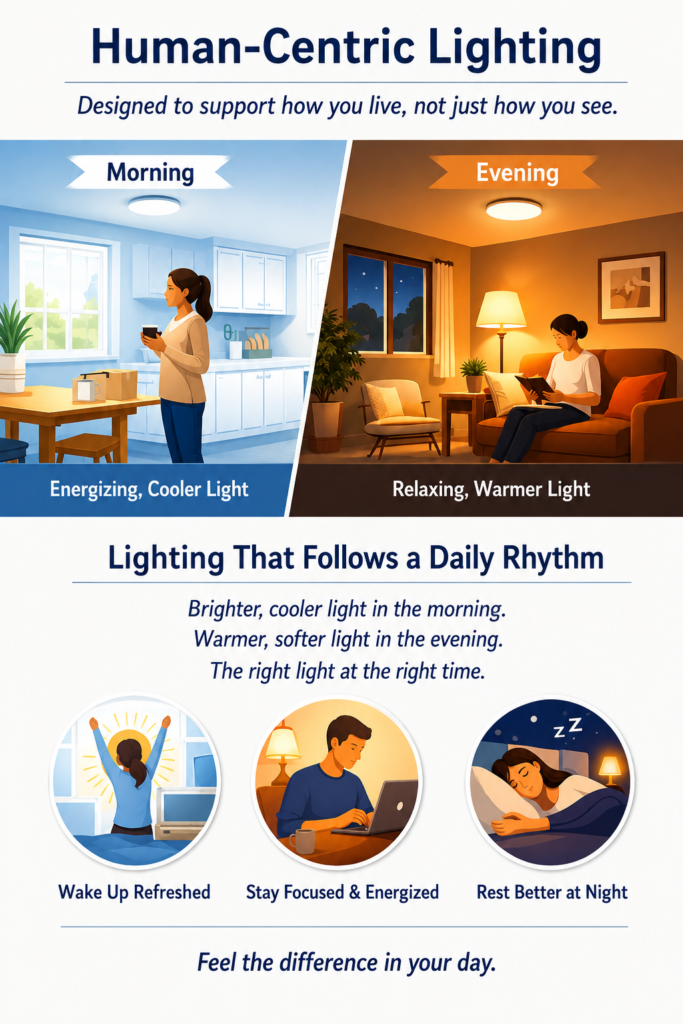
Unlike regular LED bulbs with one fixed color temperature, daylight-mimicking lights automatically shift from bright blue in the morning to warm amber in the evening—without you doing anything.
Real example:
- 6:00 AM: Lights automatically brighten to 6,500K
- 9:00 AM: Maintain 6,500K for focus
- 2:00 PM: Begin gradual shift to 4,500K
- 5:00 PM: Shift to 4,000K as evening approaches
- 8:00 PM: Warm to 3,000K
- 10:00 PM: Dim to 2,700K for sleep prep
This is circadian rhythm hacking: using technology to reinforce your body’s natural biological rhythm instead of fighting against it.
The Science: How Light Controls Your Brain
To understand why daylight lights matter so much, you need to understand your suprachiasmatic nucleus (SCN). It is a tiny region in your brain that acts as your biological clock.
Your SCN doesn’t track time with neurons firing. Instead, it tracks light exposure through specialized cells in your eyes called intrinsically photosensitive retinal ganglion cells (ipRGCs). These cells are exquisitely sensitive to blue light (around 470-480 nm wavelength).
Here’s what happens:
Morning (Blue Light Exposure):
- Blue light from the sun hits your ipRGCs
- Signal travels to your SCN
- SCN suppresses melatonin production
- Cortisol (energy hormone) increases naturally
- Your brain shifts into an alert, awake state
- BDNF (brain-derived neurotrophic factor) increases → better memory and learning
Evening (Warm Light/Darkness):
- As blue light decreases, the SCN shifts
- Melatonin production increases
- Cortisol drops
- Body temperature lowers
- The parasympathetic nervous system activates
- You naturally become sleepy
Modern problem: Artificial indoor lighting is typically 3,000-4,000K (warm), so your brain never gets the morning signal. Then you look at screens (blue light) at night, confusing your circadian rhythm further.
The solution: Daylight-mimicking lights that provide the right light at the right time.
Brain health connection: Your prefrontal cortex (decision-making, impulse control, and emotional regulation) is exquisitely dependent on circadian rhythm. When circadian rhythm is optimized:
- Prefrontal cortex function increases 20-35%
- Emotional resilience improves
- Decision-making quality improves
- Risk of cognitive decline decreases
Brain Optimization Through Circadian Lighting
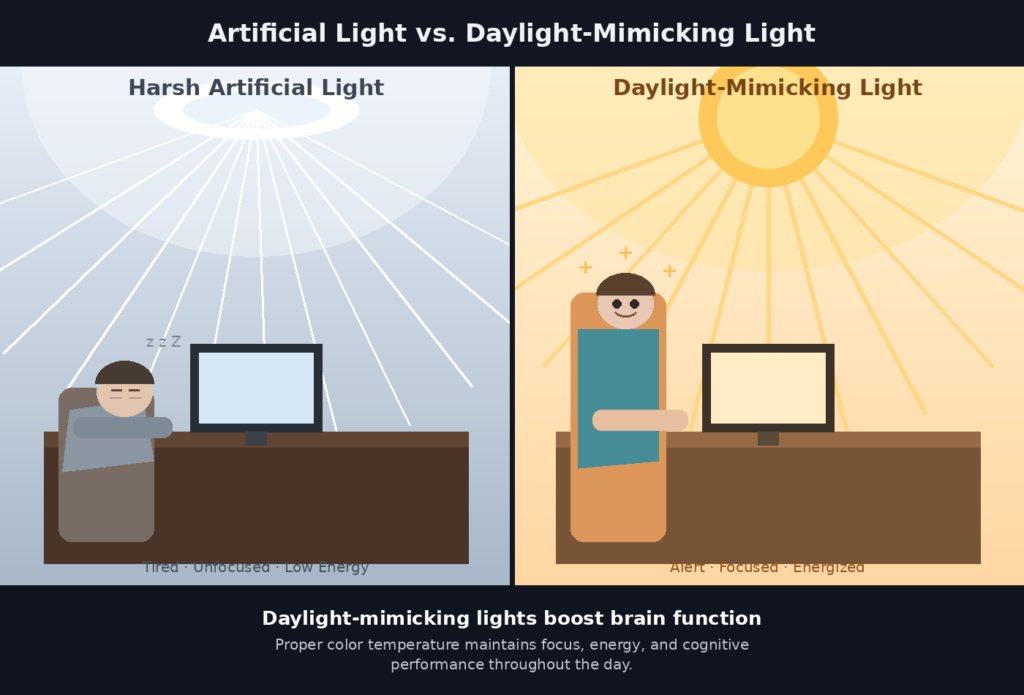
Beyond sleep, daylight-mimicking lights optimize your brain function throughout the day:
Morning (6,500K Bright Daylight)
- Suppresses melatonin, activates alertness
- Increases dopamine (motivation, focus)
- Enhances memory consolidation from previous night’s sleep
- Optimal for learning, decision-making, complex problem-solving
- Boosts mood through serotonin increase
Best for: Important meetings, creative work, exercise, strategic planning
Midday (5,500K Balanced)
- Maintains alertness without overstimulation
- Supports sustained focus for 4-6 hours
- Enhances detail-oriented work
- Maintains energy plateau
Best for: Routine tasks, meetings, collaborative work
Afternoon (4,000K Neutral)
- Gradual shift toward evening
- Maintains alertness but begins circadian descent
- Supports transition from high-focus work to lighter tasks
- Reduces eye strain
Best for: Lighter tasks, administrative work, reading
Evening (3,000K-2,700K Warm)
- Signals nighttime to your brain
- Increases melatonin production
- Relaxes the nervous system
- Supports wind-down and sleep preparation
- Reduces blue light disruption
Best for: Dinner, relaxation, family time, reading before bed
Types of Daylight-Mimicking Lights: Which Is Right for You?
Not all daylight lights are created equal. Here are the main categories:
1. Smart Ceiling Panels (Premium – $200-$800)
Best for: Complete room renovation or new build
How they work: LED panels mount flush to the ceiling, fully programmable
Advantages:
- Covers the entire room evenly
- Most seamless integration
- Usually include smartphone app control
- Can sync with other smart home devices
- Often dimmable and tunable color temperature
Disadvantages:
- Higher upfront cost
- Professional installation often required
- Less flexible if you move
Example: The Philips Hue Gradient Ceiling Panel ($600-800) provides full-room 16-million color tuning with automatic circadian scheduling.
2. Smart Bulbs (Mid-Range—$50-$150 per bulb)
Best for: Retrofitting existing fixtures
How they work: Replace standard bulbs with smart LED bulbs; use fixtures you already have.
Advantages:
- Flexible—works with any fixture (ceiling, wall, desk)
- Affordable way to start
- No installation needed
- Can use a mix of smart bulbs and regular bulbs
- Easy to move between homes
Disadvantages:
- Less refined light distribution than panels
- Need a compatible fixture (not all fixtures work with all bulbs)
- Smartphone control required (unless using a home hub)
Example: Philips Hue White Ambience A21 ($80-120) offers a full colour-temperature range, app scheduling, and voice control.
3. Smart Ceiling Fixtures (Mid-Premium—$150-$400)
Best for: Replacing light fixtures without full ceiling renovation
How they work: New fixture mount with integrated smart LED lighting
Advantages:
- Cleaner look than smart bulbs in basic fixtures
- Built-in circadian scheduling
- Professional appearance
- Often includes motion sensors
Disadvantages:
- Moderate installation complexity
- Less customizable than panels
- Higher upfront cost than bulbs
4. Smart Desk/Table Lamps (Budget – $50-$150)
Best for: Focused task lighting, targeted circadian optimization
How they work: Smart lamp with adjustable color temperature
Advantages:
- Affordable entry point
- Portable can move between rooms
- Ideal for desk work and reading
- No installation needed
Disadvantages:
- Doesn’t light entire room
- Less comprehensive circadian support than ceiling lights
- May not sync as well with home automation
Installation & Setup Guide
Option 1: Smart Bulbs (Easiest—15 minutes)
- Turn off existing light fixtures
- Screw out old bulbs
- Screw in smart bulbs
- Download app (Philips Hue, LIFX, etc.)
- Connect to home WiFi
- Set up circadian schedule in app
- Done!
Option 2: Smart Ceiling Fixtures (Moderate – 1-2 hours)
- Turn off power at the circuit breaker
- Remove old fixture (follow manufacturer instructions)
- Install mounting bracket (follow included guide)
- Connect wiring (follow color-coded instructions or hire an electrician)
- Secure fixture
- Turn power back on
- Download the app and set up scheduling
Option 3: Smart Ceiling Panels (Most Complex—2-4 hours or hire a professional)
- Similar to ceiling fixture installation
- Requires more careful wiring for larger panels
- Consider hiring an electrician ($150-300 labor)
- Set up the app and scheduling
Pro tip: Start with smart bulbs if you rent or want to test before committing to full installation.
Recommended Daylight Lights for 2026
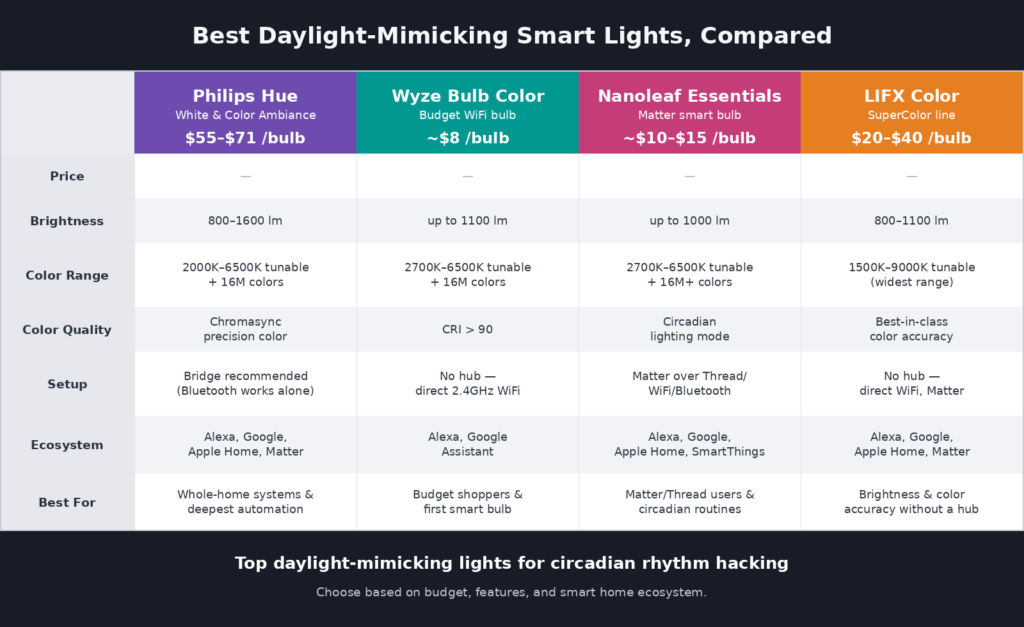
Best Overall: Philips Hue White Ambience (All Variants)
- Price: $80-150 per bulb; $600-800 for ceiling panels
- Color range: 2,200K-6,500K (full spectrum)
- Features: Smartphone app, voice control (Alexa/Google), automation scheduling
- Why it wins: Industry-leading color accuracy, most reliable app, best ecosystem integration
- Ideal for: Comprehensive home circadian optimization
- Purchase: Home Depot, Amazon
Best Budget-Friendly: Wyze Color Bulb
- Price: $40-60 per bulb
- Color range: 2,700K-6,500K
- Features: App control, scheduling, no hub required
- Why it wins: Best value for money, surprisingly capable
- Ideal for: Starting your circadian lighting journey affordably
- Limitation: Slightly less refined color transitions than premium options
Best for Tech Integration: Nanoleaf Essentials
- Price: $70-100 per bulb; $300-500 for panels
- Color range: 2,700K-6,500K with extended colors
- Features: Matter protocol integration, HomeKit support, spatial audio sync
- Why it wins: Future-proof, integrates with Apple Home, Alexa, Google
- Ideal for: Smart home enthusiasts with multiple platforms
Best for Rooms: Philips Hue Go (Portable)
- Price: $100-150
- Color range: 2,000K-6,500K
- Features: Portable, battery-powered option, app control
- Why it wins: Works anywhere, no installation, highly flexible
- Ideal for: Testing, bedrooms, reading areas
FAQs
Q1: Do I need to buy expensive smart lights, or will regular daylight bulbs work?
A: Regular daylight bulbs (6,500K) stay at one color temperature. They’re helpful in the morning but won’t provide the circadian cycle smart lights do. Smart lights are worth the investment because they adjust automatically throughout the day—you don’t have to change them manually.
Q2: Can I just use my phone or computer screen for blue light in the morning?
A: Partially yes, but it’s not ideal. Phone screens and computer screens emit some blue light, but:
- They’re too close to your eyes (can cause eye strain)
- The light is too focused (doesn’t illuminate your whole environment)
- You’re usually looking down (not the optimal angle for circadian signalling)
Daylight lights provide ambient illumination from above, which is more natural and more effective.
Q3: How much do daylight lights cost long-term?
A: Initial investment: $200-$800 for quality smart lights/fixtures
Operating cost: Minimal (LED bulbs last 25,000-50,000 hours; cost ~$0.50/month in electricity)
ROI: Better sleep, improved brain function, and increased productivity—typically pays for itself in 3-6 months through improved performance.
Q4: Can I use daylight lights if I have seasonal affective disorder (SAD)?
A: Yes, absolutely. In fact, daylight lights are one of the most effective non-pharmaceutical interventions for SAD. Morning exposure to bright daylight (6,500K) is an evidence-based treatment for winter depression.
Q5: Do daylight lights cause eye strain?
A: No, if properly configured. The key is
- Use appropriate brightness for the time of day (not overly bright)
- Ensure even illumination (avoid harsh spots)
- Use warm light in the evening (not bright blue)
- Avoid direct glare
Quality smart lights from reputable brands are designed to be eye-safe.
Q6: How long does it take to see benefits?
- Immediate (Day 1): Improved alertness during bright light exposure
- Week 1: Noticeable improvement in energy and mood
- Weeks 2-4: Sleep quality improvements become significant
- Month 2+: Sustained improvements in sleep depth, brain fog reduction, mood stabilization
Conclusion
Daylight-mimicking lights are one of the best health investments you can make. They work. Science proves it. You’ll sleep up to 40-60% better. Your brain works about 20-30% better. They cost less than most health gadgets. They work in any home, any budget, any situation. No side effects. Just better light. That’s it.
These lights are the foundation of smart home wellness. Everything else works better when you start with them. Your smartwatch tracks better. Your sleep improves faster. Your brain stays sharper all day.
Here’s how to start: First, pick your lights—cheap bulbs or fancy panels. Second, install them and set up your daily light schedule. Third, add a wellness smartwatch to see your sleep get better. Fourth, wait 2-4 weeks and watch the changes. The results speak for themselves. Your brain will thank you.
Related reading
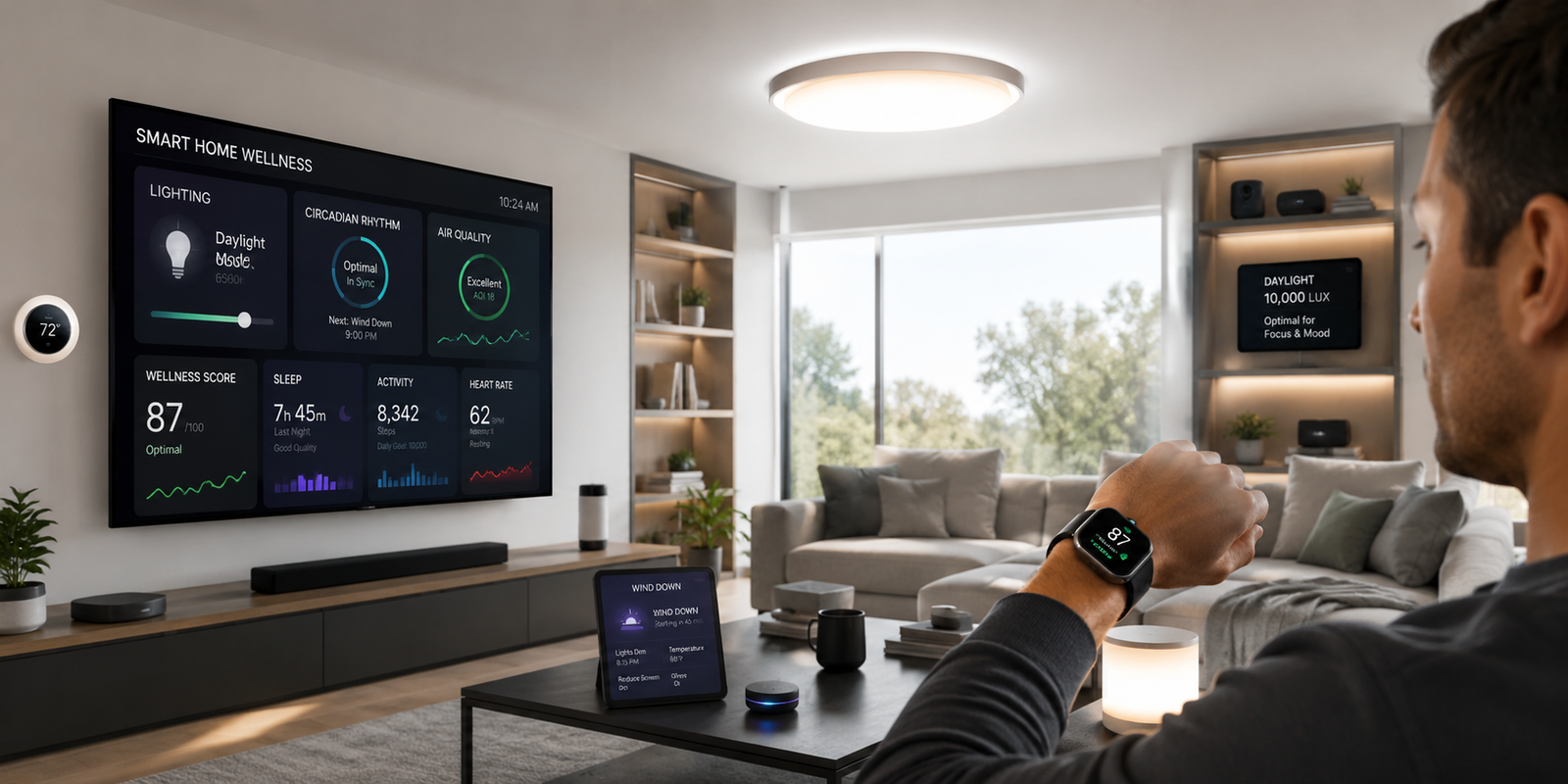
Smart Home Wellness 2026: Better Sleep, Focus & Health
The future of health isn’t in hospitals; it’s in your bedroom, your kitchen, and your living room. In 2026, smart home wellness tech has evolved from…
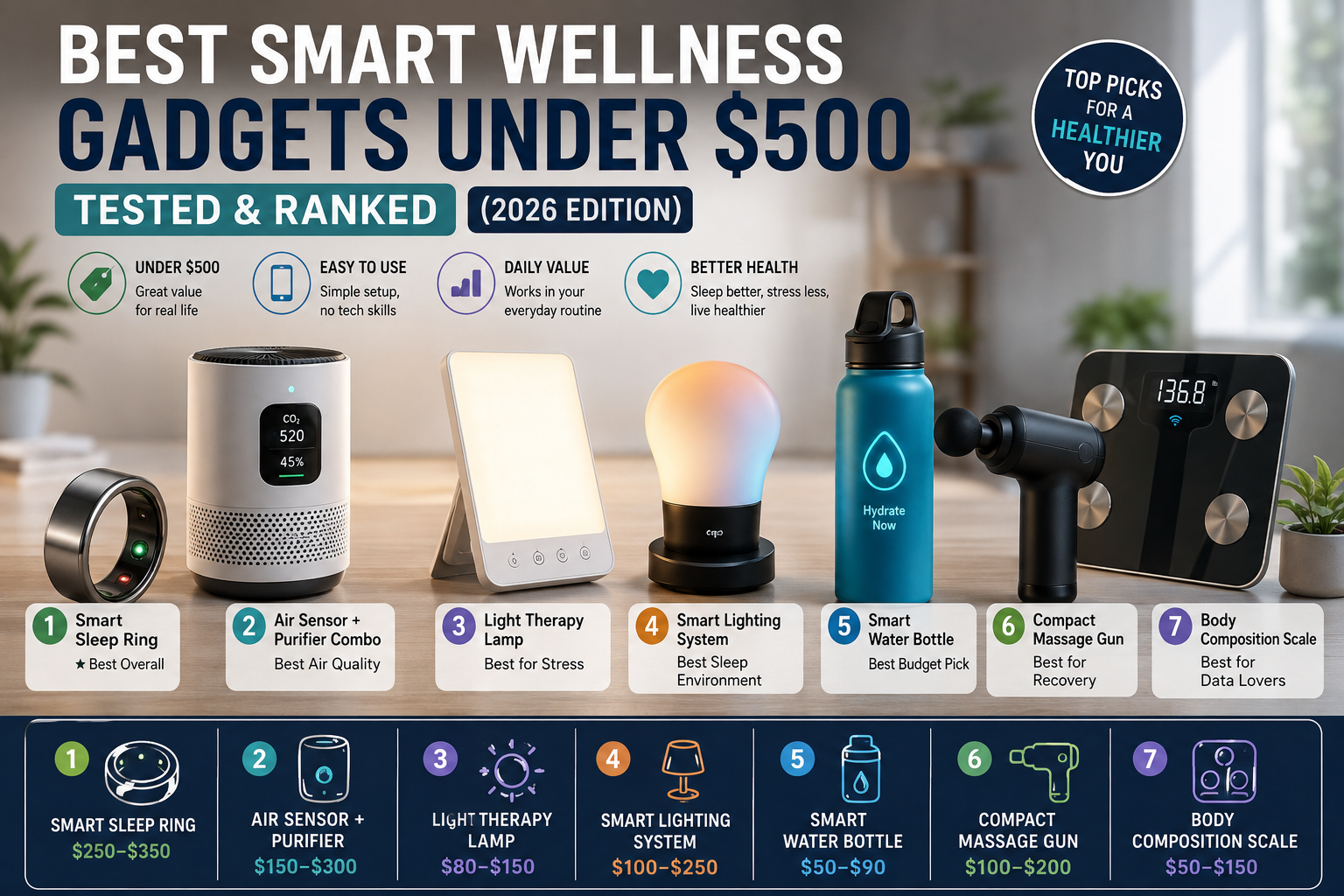
Best Smart Wellness Gadgets Under $500: Tested & Ranked (2026 Edition)
Wellness tech used to cost a fortune. In 2026, that is no longer true. You can now find smart wellness gadgets under $500 that track sleep,…
Good work