Sleep Optimization Tech 2026: Smart Lights + Air Sensors for Better Healthspan
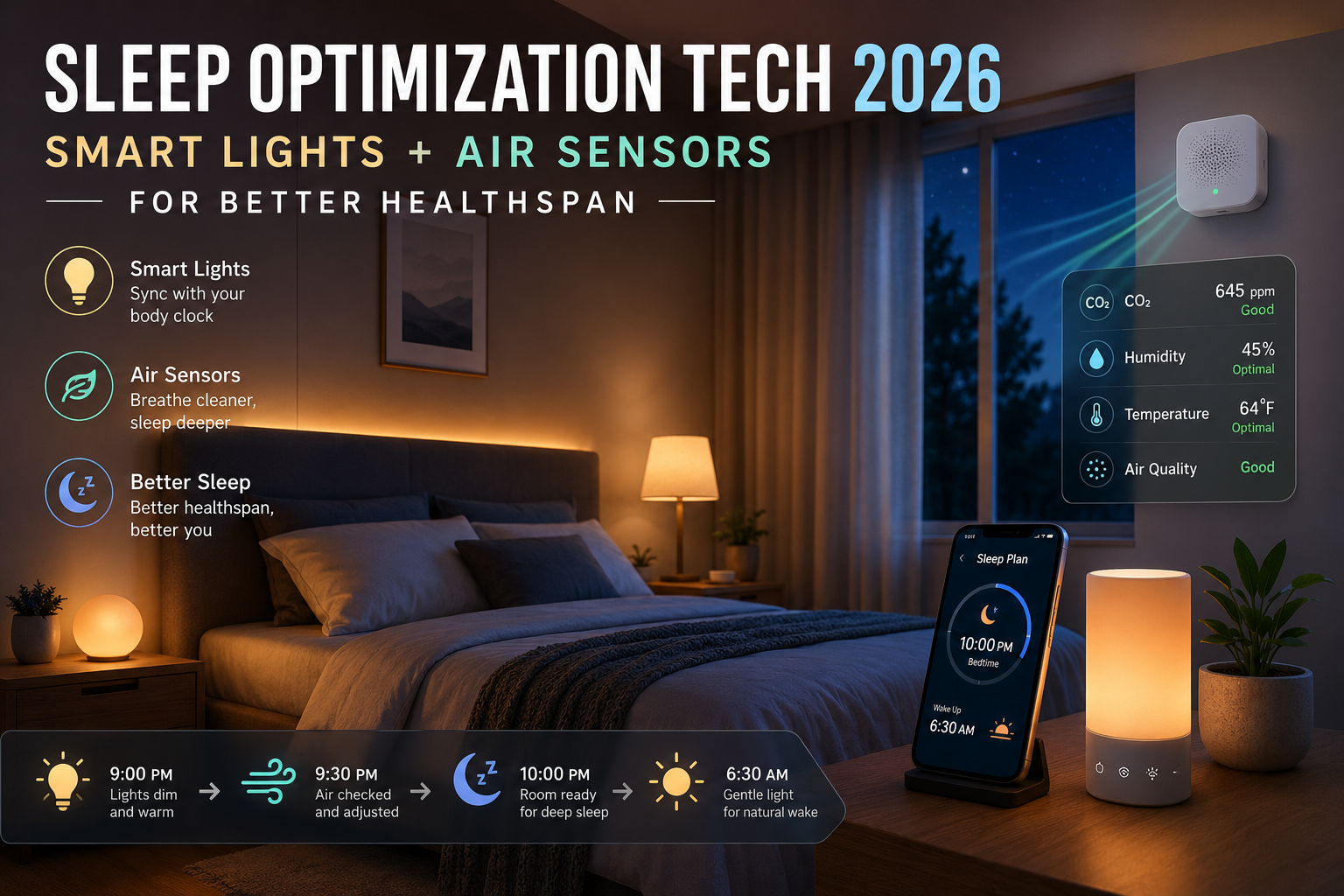
Sleep is not just rest. It is one of the biggest parts of your health. Good sleep helps your brain, your heart, and your mood. Bad sleep can hurt all three. In 2026, more people are using smart tech to fix their sleep. Two tools stand out the most: smart lights and air sensors. Together, they are changing how we sleep and how long we stay healthy. This is often called “healthspan,” which means the years you live in good health, not just the years you live.
In this blog, we will look at how these tools work. We will keep things simple. No hard words. No long, tricky sentences. Just clear facts you can use tonight.
Why Sleep Affects Your Healthspan
Your body heals while you sleep. It repairs muscles. It clears waste from your brain. It balances hormones. When sleep is poor, these jobs do not get done well.
Over time, bad sleep can lead to:
- Weak memory and focus
- Higher stress and anxiety
- Weight gain
- Higher risk of heart problems
- A weaker immune system
This is why many health experts now say sleep is as important as diet and exercise. If you want to live longer and feel better, sleep must be a priority.
What Is Sleep Optimization Tech?
Sleep optimization tech means tools that help you sleep better. These tools track your sleep, fix your room, or change your habits. In 2026, this tech has become smarter and cheaper. Two of the top tools are smart lights and air sensors. Let’s look at each one.
Smart Lights: Training Your Body Clock
Your body has an internal clock. It is called the circadian rhythm. This clock tells your brain when to feel awake and when to feel sleepy. Light is the biggest signal for this clock.
Bright blue light in the evening can confuse your brain. It makes your brain think it is still daytime. This can delay sleep and lower sleep quality. Smart lights fix this problem.
How Smart Lights Help
Smart lights can change color and brightness on their own. Here is how they support better sleep:
1. Warm light in the evening: As night comes, smart lights slowly turn warmer and dimmer. This tells your brain it is time to relax. Many systems start this shift two to three hours before bedtime.
2. Bright, cool light in the morning: In the morning, smart lights can turn bright and cool, like sunlight. This wakes up your brain fast. It also helps reset your body clock for the new day.
3. Sleep and wake schedules: You can set your lights to match your sleep goals. For example, lights can slowly dim at 9:30 pm if you want to sleep by 10 pm.
4. No harsh light at night: If you wake up at night, some smart lights use a soft red or amber glow. This type of light does not disturb your sleep hormones as much as white or blue light.
5. Sync with sleep trackers: In 2026, many smart lights connect with sleep watches or rings. If your tracker sees you are in deep sleep, the lights stay off. If it is close to your wake time, the lights slowly brighten to wake you gently.
This gentle wake method is often better than a loud alarm. Loud alarms can shock your body and raise stress hormones early in the day.
Air Sensors: The Hidden Sleep Factor
Most people think about light and noise when they think about sleep. But air quality is just as important, and many people forget about it.
Air sensors are small devices that check the air in your room. They measure things like:
- CO₂ (carbon dioxide) levels
- Humidity
- Temperature
- Dust and allergens
- VOCs (chemicals from paint, furniture, or cleaning products)
Why Air Quality Affects Sleep
When you sleep with the door and windows closed, CO₂ can build up in the room. High CO₂ levels can make you feel tired, give you headaches, and lower your sleep quality. Studies have shown that better airflow can lead to deeper, more restful sleep.
Humidity also matters. If the air is too dry, your throat and nose can feel uncomfortable. If it is too wet, it can trigger allergies or make the room feel stuffy. The best sleep often happens in a room with balanced humidity, usually between 40 and 50 percent.
Temperature plays a role too. Most sleep experts agree that a cooler room, around 60 to 67°F (15 to 19°C), helps you fall asleep faster and stay asleep longer.
How Air Sensors Help in 2026
Modern air sensors do more than just show numbers on a screen. They connect to smart systems in your home. Here is what they can do:
1. Auto-adjust your air system: If CO₂ rises too high, the sensor can turn on a fan or open a smart vent. This brings in fresh air without you waking up.
2. Control humidity: If the air gets too dry, a smart humidifier can turn on. If it gets too wet, a dehumidifier can turn on. This all happens without you doing anything.
3. Alert you to allergens: If dust or pollen levels rise, the sensor can turn on an air purifier. This helps people with allergies or asthma sleep better.
4. Track long-term air trends: Over weeks, the sensor builds a picture of your room’s air. You can see patterns, like your room getting stuffy on hot nights. This helps you fix the root cause, not just the symptom.
Smart Lights + Air Sensors: Working Together
The real power comes when these two systems work as a team. In 2026, many smart home platforms allow lights and air sensors to talk to each other. Here is an example of how a smart bedroom might work at night:
- At 9:00 pm, the lights start dimming and turning warm.
- At 9:30 pm, the air sensor checks the room’s CO2 and humidity.
- If the air is stuffy, a smart fan turns on quietly.
- At 10:00 pm, the lights turn very low, almost off.
- During the night, if CO2 rises, airflow increases without waking you.
- In the morning, the lights slowly brighten as your sleep tracker shows lighter sleep stages.
- The air system also adjusts to a fresher, slightly cooler morning air to help you wake up.
This full system creates a sleep environment that changes with your body’s needs. You do not have to think about it. It happens on its own.
Do You Need Expensive Tech to Start?
No. You do not need to buy every device at once. Here are simple steps to begin:
- Start with one smart bulb in your bedroom. Set it to dim in the evening.
- Add a basic air sensor to track CO₂ and humidity. Many affordable options exist in 2026.
- Use a fan or open a window based on what the sensor shows, even without automation.
- Add automation later once you understand what your room needs most.
Small steps can still make a big difference in your sleep and healthspan.
Simple Tips for Better Sleep Tonight
Even without smart tech, you can improve your sleep with these habits:
- Dim your lights one hour before bed
- Avoid bright screens late at night
- Keep your room cool and slightly humid
- Open a window for fresh air if possible
- Keep a steady sleep and wake time
- Avoid heavy meals late at night
Smart tech can support these habits, but good habits still come first.
Conclusion
Sleep is one of the most powerful tools for a longer, healthier life. In 2026, smart lights and air sensors make it easier than ever to build a room that supports deep, natural sleep. These tools work quietly in the background, adjusting light and air so your body can rest the way it was designed to.
You do not need a perfect setup to start. Begin small, learn what your body needs, and build from there. Better sleep tonight can mean a better, longer healthspan for years to come.
FAQs
1. What is healthspan, and how is it different from lifespan?
Lifespan means how many years you live. Healthspan means how many of those years you live in good health. Good sleep supports a longer healthspan, not just a longer life.
2. Can smart lights really improve sleep quality?
Yes. Smart lights that shift from cool to warm tones in the evening help signal your brain that it is time to rest. This supports your natural body clock and can lead to deeper sleep.
3. What is a good CO₂ level for a bedroom?
Many sleep experts suggest keeping bedroom CO₂ levels below 1000 ppm (parts per million). Levels above this can make you feel tired or foggy in the morning.
4. Do I need to buy a full smart home system to benefit from this tech?
No. You can start with one smart bulb and a basic air sensor. You do not need a full automated system to see benefits.
5. What humidity level is best for sleep?
Most experts recommend keeping bedroom humidity between 40 and 50 percent for comfortable, restful sleep.
6. Are red or amber night lights better than white lights at night?
Yes. Red and amber lights have less impact on your sleep hormones compared to white or blue light, making them a better choice if you need light during the night.
7. How long before bed should I dim my lights?
Try dimming your lights one to three hours before your target bedtime. This gives your brain time to naturally prepare for sleep. Most experts recommend keeping bedroom humidity between 40 and 50 percent for comfortable, restful sleep.
Related reading
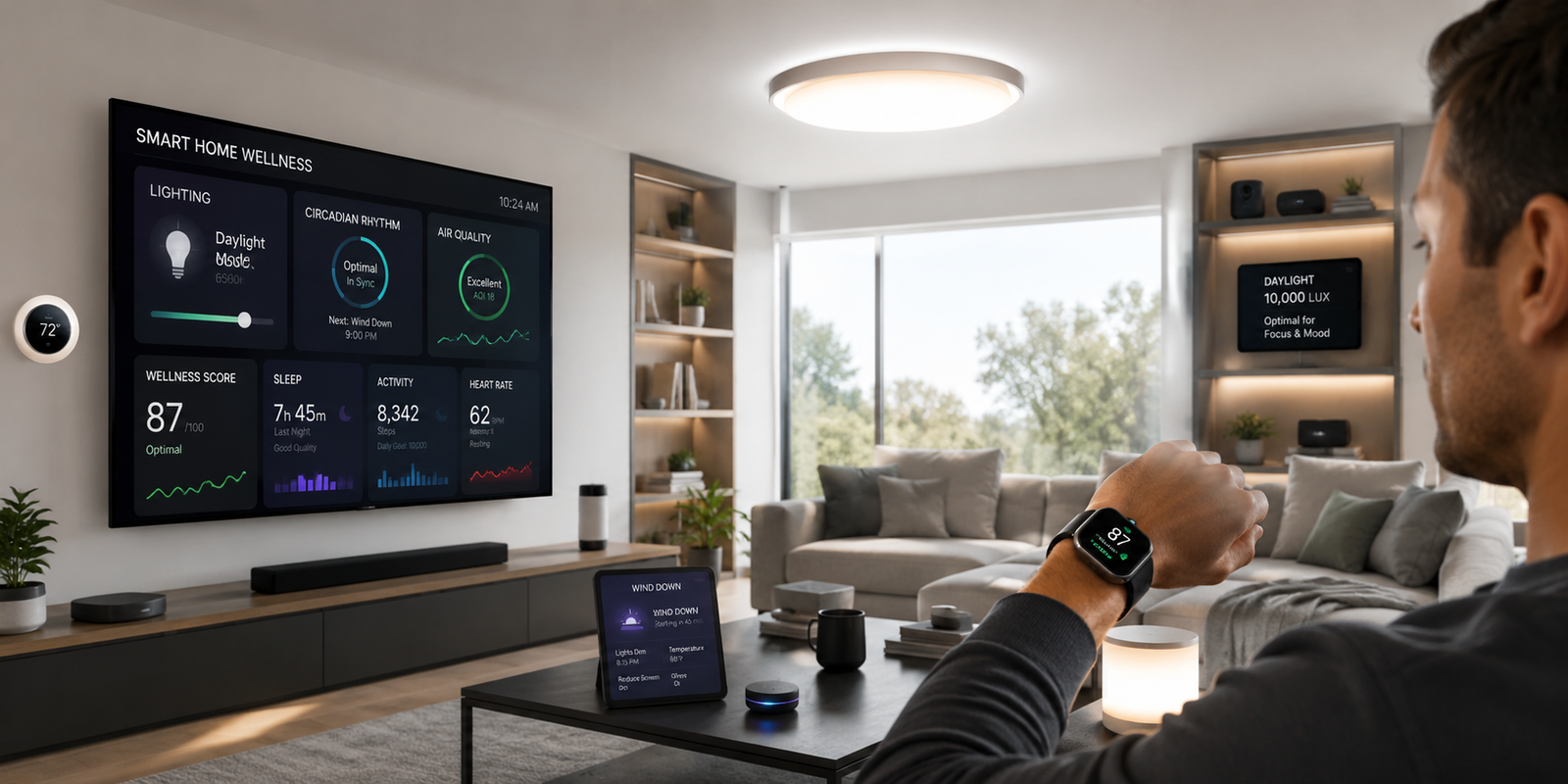
Smart Home Wellness 2026: Better Sleep, Focus & Health
The future of health isn’t in hospitals; it’s in your bedroom, your kitchen, and your living room. In 2026, smart home wellness tech has evolved from…
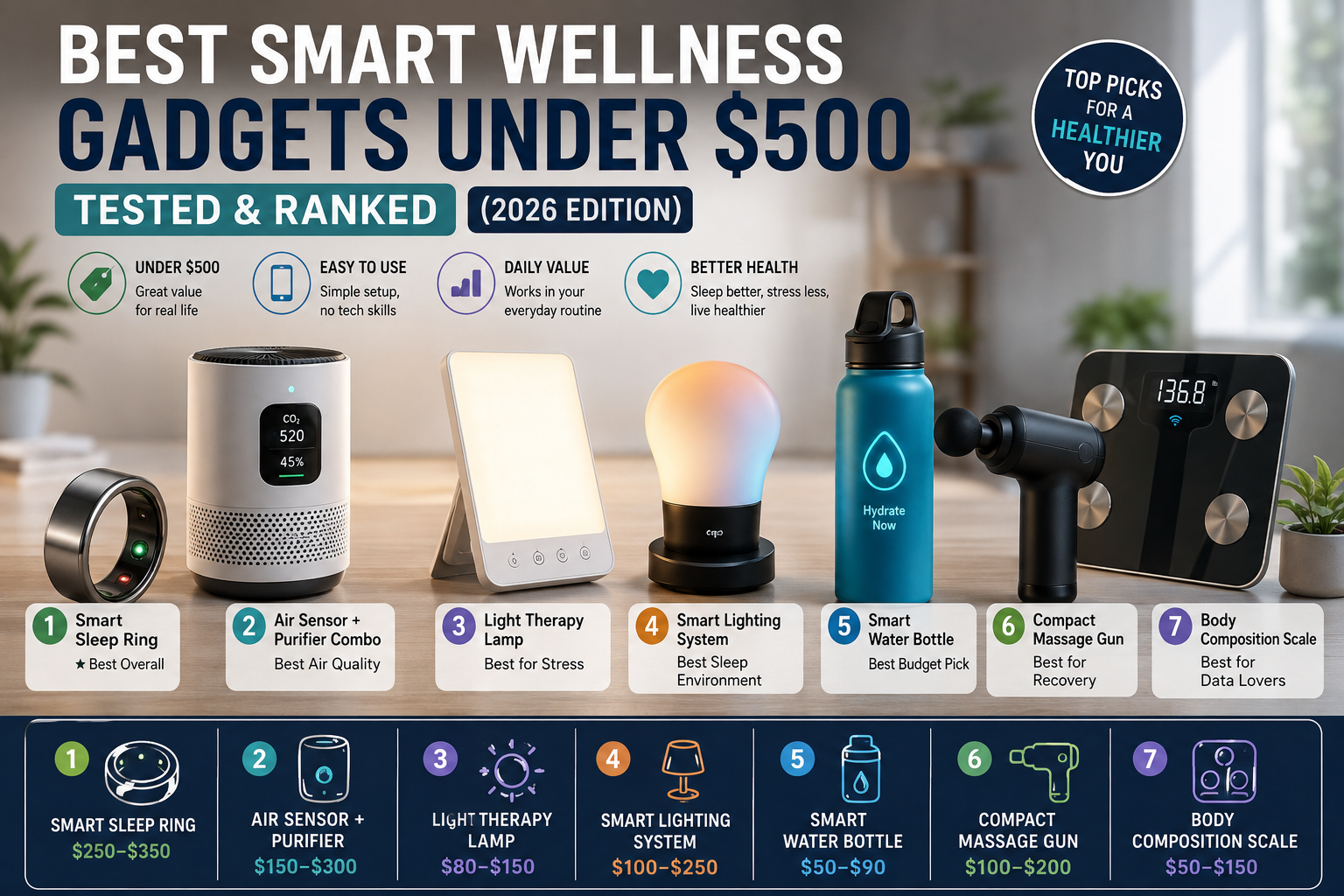
Best Smart Wellness Gadgets Under $500: Tested & Ranked (2026 Edition)
Wellness tech used to cost a fortune. In 2026, that is no longer true. You can now find smart wellness gadgets under $500 that track sleep,…