AI Training Apps Explained: How Athletes Are Using Tech to Train Smarter
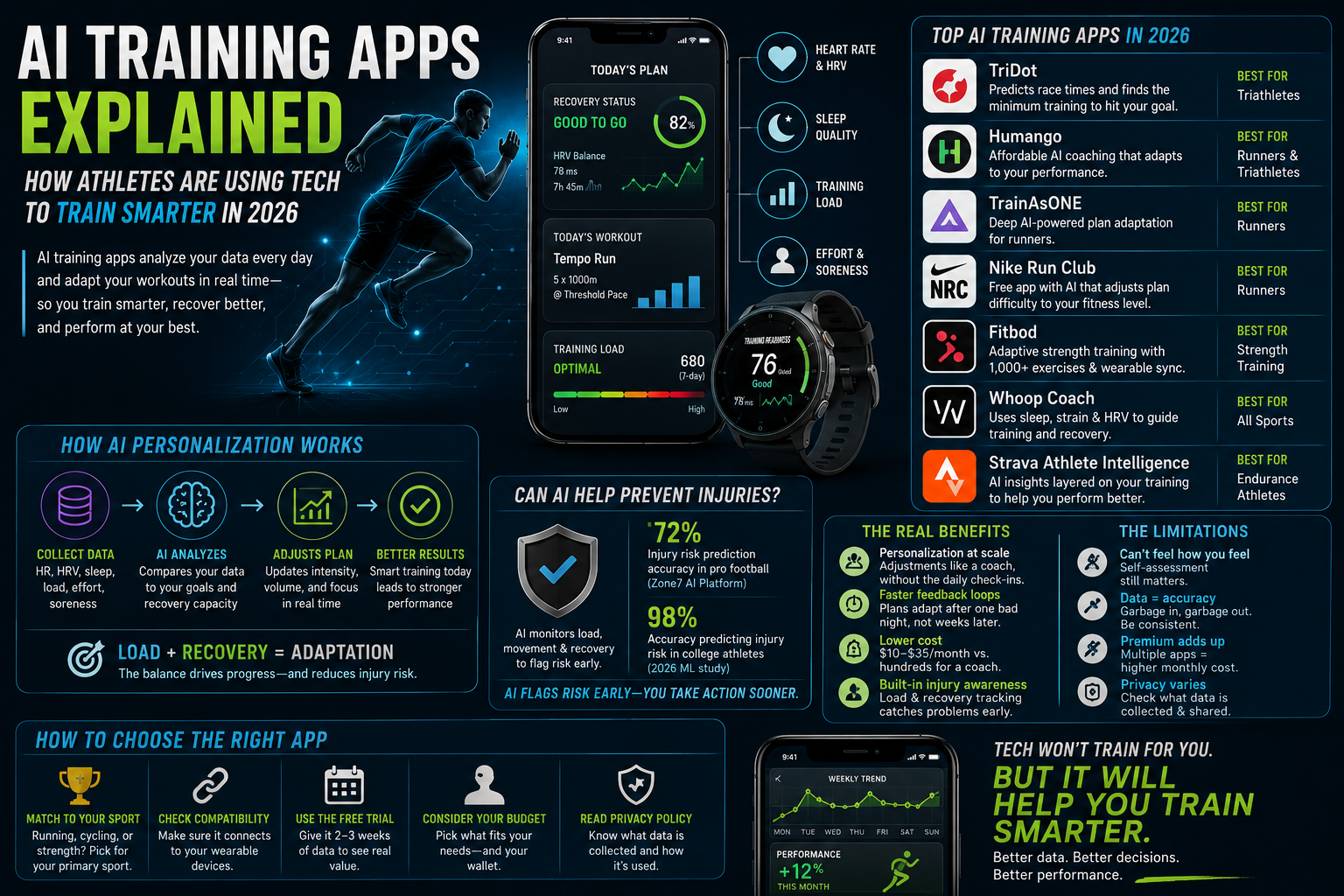
Athletes used to train off a printed plan and a stopwatch. That plan didn’t know if you slept badly, missed a session, or showed up already tired. AI training apps changed that. They read your data every day and rebuild your plan around it.
This is the second post in our sports tech series. If you haven’t seen it yet, our guide to the best fitness wearables for athletes covers the hardware that feeds these apps their data. This post covers what the apps actually do with it.
What Is an AI Training App?
An AI training app uses machine learning to adjust your workouts based on real performance data, not a fixed calendar. Instead of following week 6 of a generic 12-week plan, you get a session built from what your body did yesterday.
The core inputs are usually
- Heart rate and heart rate variability (HRV)
- Sleep quality and duration
- Training load from past sessions
- Self-reported effort (RPE) or soreness
The app compares this against your goal—a race, a strength target, a season—and adjusts the next session up, down, or sideways.
How the Personalization Actually Works
Most of these apps run on a load-response model: training stress plus recovery capacity equals adaptation. Researchers have used this framework to explain how the balance between training stimulus and an athlete’s recovery capacity drives both performance gains and injury risk. When your data shows you’re absorbing load well, the app pushes harder. When it doesn’t, the app backs off before you burn out or get hurt.
This is the real shift from static plans. The algorithm isn’t guessing—it’s reacting to your actual trend line.
AI Training Apps Athletes Are Actually Using in 2026
Here’s a quick look at what’s popular right now, by use case:
- TriDot: Built for triathletes. It analyzes your training data to predict race times with strong accuracy and calculates the minimum training volume needed to hit your goal, which suits athletes balancing training with work and family.
- Humango: A budget-friendly option that still delivers genuine AI-adjusted coaching, popular with runners and triathletes who want adaptive plans without a premium price tag.
- TrainAsONE: Known for going deepest on AI-driven plan adaptation for runners.
- Nike Run Club: Free, and its 2026 version uses AI to adjust plan difficulty to your current fitness level so sessions stay challenging without pushing you into burnout.
- Fitbod: Strength-focused, offering a library of over 1,000 exercises with adaptive recommendations and integrations with Apple Health, Apple Watch, Strava, and Fitbit.
- Whoop Coach: Synthesizes sleep, strain, and heart rate variability into daily training and recovery guidance, useful if you’re already wearing a Whoop.
- Strava Athlete Intelligence: Works as a layer on top of whatever plan you’re already following, adding insight without replacing your coach.
Pick based on your sport first, budget second. A triathlete and a powerlifter need very different tools.
Can AI Actually Prevent Injuries?
This is where the research gets interesting. AI-integrated wearable technology now monitors heart rate, sleep quality, gait patterns, and training load in real time, which allows for earlier intervention before an injury happens. One system already in use at the professional level backs this up: Zone7’s AI platform, used by more than 50 professional football clubs, has predicted injury risk with 72% accuracy across hundreds of injuries studied from multiple teams. A separate 2026 study went further, with a machine learning model reaching 98% accuracy predicting injury risk in college athletes using workload and recovery data.
That said, this is still an emerging field, and results vary a lot between models and sports. Treat AI injury flags as an early warning system, not a diagnosis.
The Real Benefits
- Personalization at scale. You get adjustments a human coach would need daily check-ins to make.
- Faster feedback loops. Plans shift the day after a bad night’s sleep, not three weeks later.
- Lower cost than human coaching. Most apps run $10–$35/month versus hundreds for a personal coach.
- Built-in injury awareness. Load and recovery tracking catches overtraining patterns you’d otherwise miss.
What These Apps Can’t Do
- They can’t feel how your knee actually feels today; self-assessment still matters.
- Accuracy depends entirely on how consistently you log data and wear your device.
- Premium tiers add up fast if you’re using more than one app.
- Data privacy varies by provider, so check what’s collected before connecting a wearable.
How to Choose One
Match the app to your sport first; a running-specific AI coach will always outperform a general fitness app for running. Check that it connects to the wearable you already own. Use the free trial fully; most platforms need two to three weeks of your data before the recommendations get genuinely useful.
FAQ
1. Are AI training apps accurate?
Accuracy depends on the app and how much data you feed it. Most improve significantly after a few weeks of consistent use.
2. Do I need a wearable to use one?
Not always, but apps connected to a heart rate monitor or smartwatch give far better recommendations than manual entry alone.
3. Can AI replace a real coach?
For most amateur and recreational athletes, yes, largely. Elite athletes still tend to pair AI tools with a human coach for the nuance an algorithm can’t read.
Conclusion
Training plans used to be static. In 2026, they’re not—they listen and adjust to what they hear. That’s the real value of AI training apps: they catch what a fixed calendar misses, from a bad night’s sleep to creeping injury risk. But data isn’t understanding. An app can flag a drop in HRV; it can’t feel a tight hamstring. That judgment still belongs to the athlete.
Used well, these apps close the gap between guesswork and the kind of personalized training elite athletes have long had. Used passively, they’re just an expensive version of the plan that never knew you were tired. Pick the app built for your sport, feed it a few honest weeks of data, and let it catch what you might have missed.
Related reading
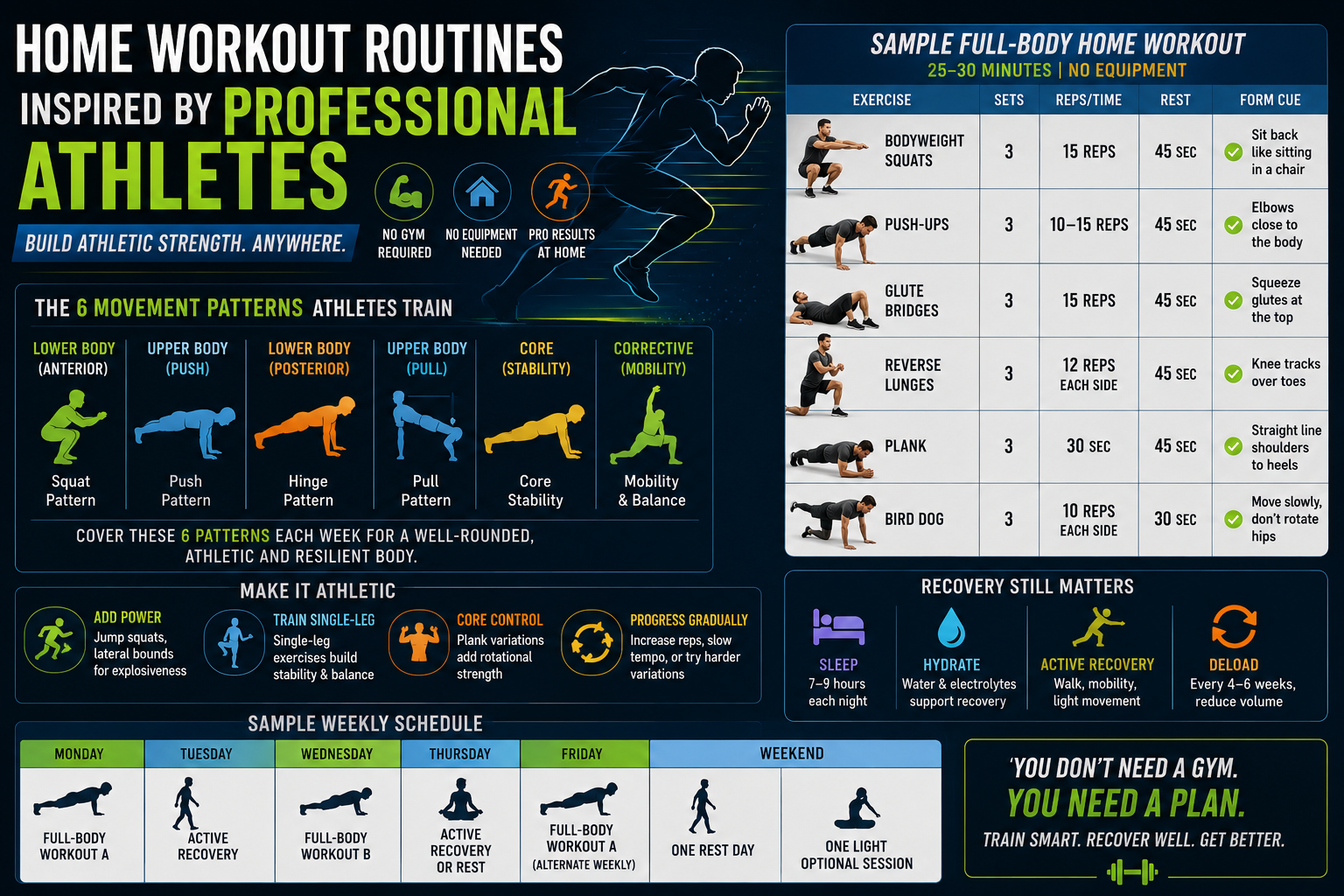
Home Workout Routines Inspired by Professional Athletes
Professional athletes train with purpose. Every sprint, jump, lift, and recovery session helps them perform better on the field or court. You can bring the same…
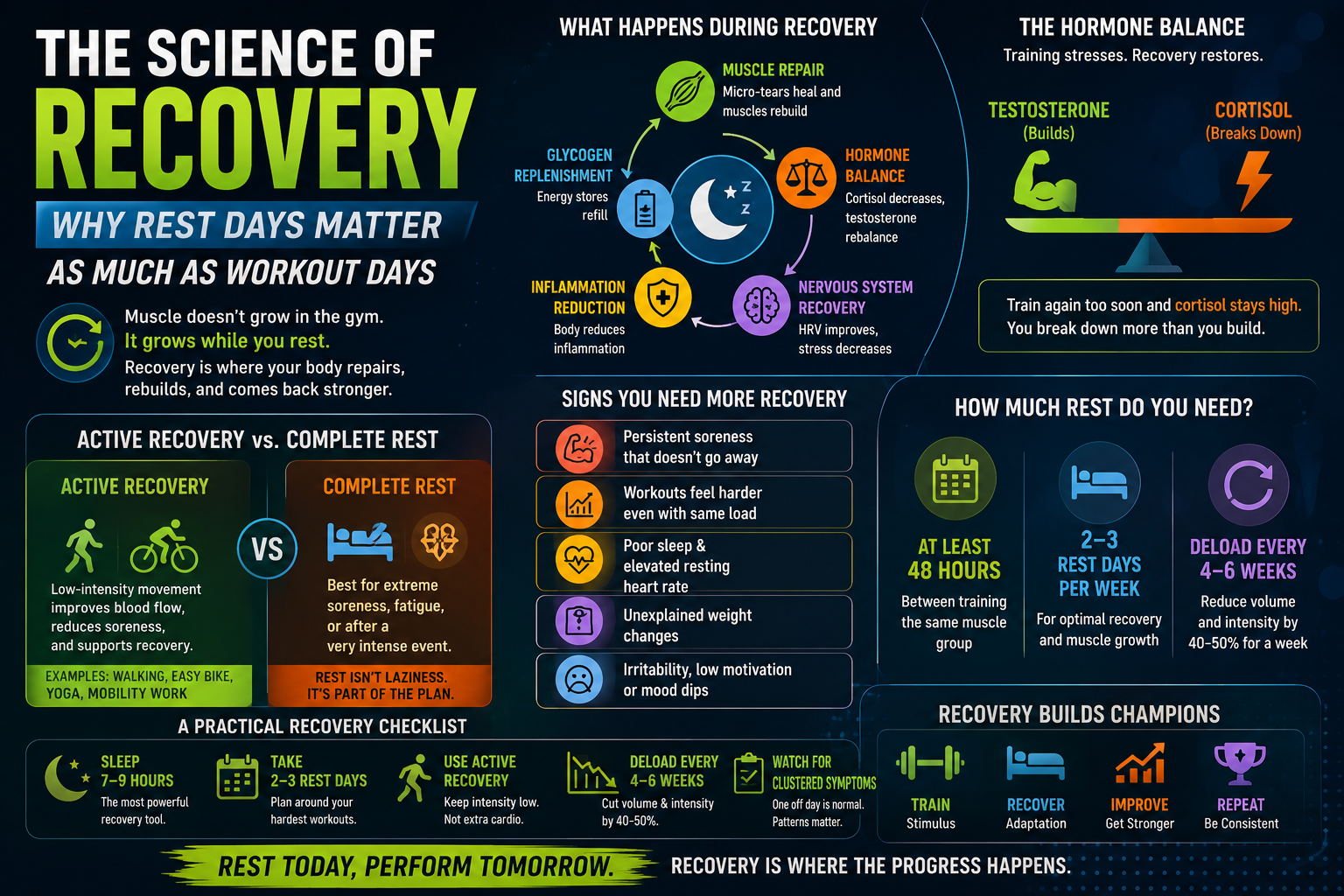
The Science of Recovery: Why Rest Days Matter as Much as Workout Days
Skip a rest day, and you feel like you’re getting ahead. Take one, and it can feel like standing still. Physiologically, it’s the opposite. Our post…