The Science of Recovery: Why Rest Days Matter as Much as Workout Days
Skip a rest day, and you feel like you’re getting ahead. Take one, and it can feel like standing still. Physiologically, it’s the opposite. Our post on World Cup athlete training touched on how elite recovery protocols are individualized for each player. This post breaks down why that matters, and why rest days aren’t a break from training. They’re part of it.
What Actually Happens in Your Body During Recovery
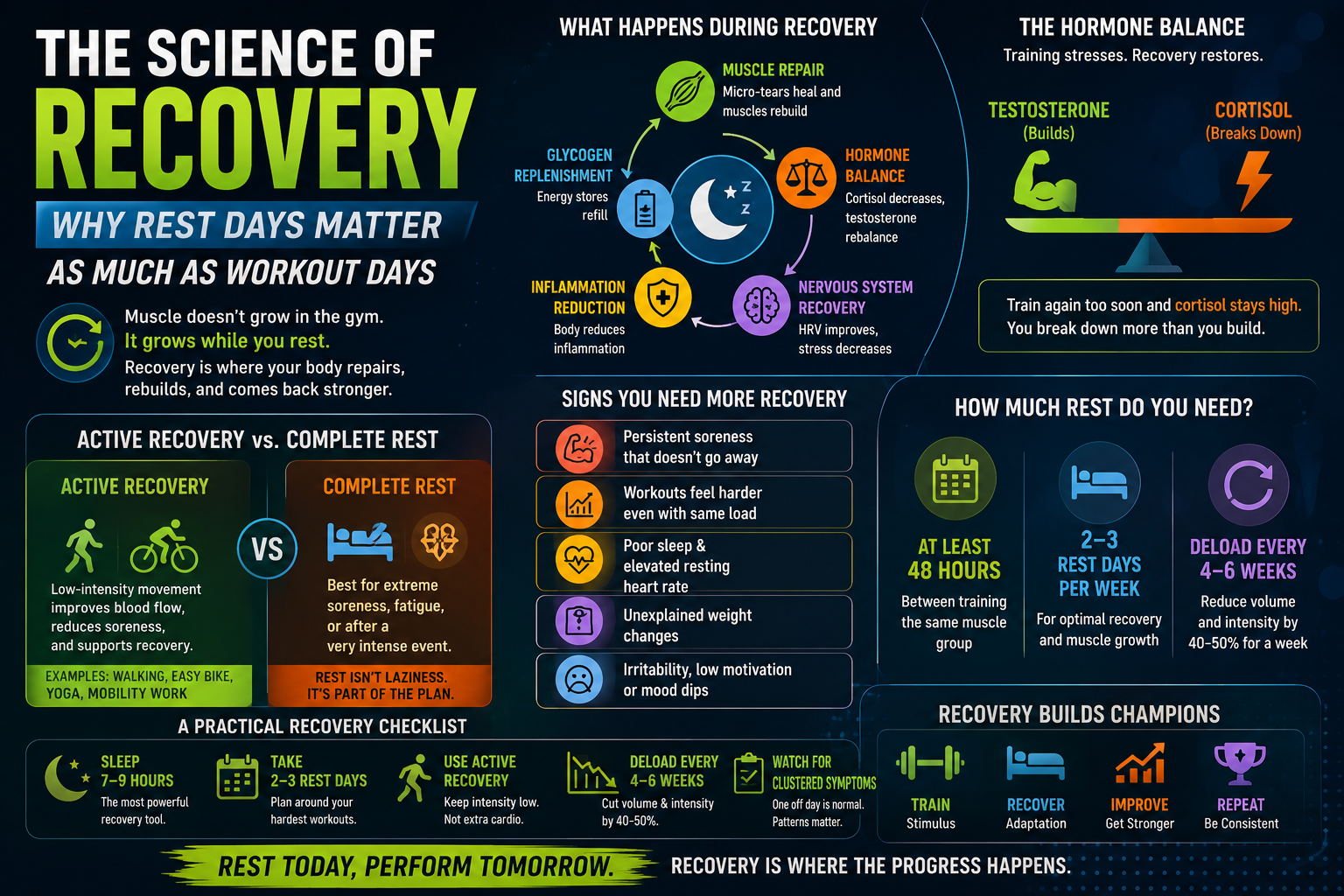
Training doesn’t build muscle. Recovery does. During recovery, the body repairs micro-tears in muscle fibers through a process called muscle protein synthesis, while also replenishing glycogen stores, reducing inflammation, and rebalancing stress hormones.
This isn’t instant. Muscle repair typically takes at least 48 to 72 hours to complete. Research on neuromuscular recovery backs this up, finding measurable declines in muscle function persisting for 48 hours after strength training, with full resolution sometimes taking up to 72 hours. Your muscles can feel ready well before your nervous system’s ability to fully recruit them catches up.
The Hormone Balance Behind Recovery
Two hormones drive this process in opposite directions. Testosterone promotes tissue building, while cortisol, the primary stress hormone, promotes tissue breakdown. Training shifts this ratio toward growth, but only temporarily.
Train again before that ratio resets, and cortisol stays chronically elevated while testosterone drops, creating a catabolic environment where the body breaks down tissue faster than it can rebuild it. This is one of the more counterintuitive facts in exercise science: pushing harder without adequate rest can leave you weaker, not stronger.
Recovery also has a nervous-system component. The parasympathetic nervous system, tracked through heart rate variability, needs time to regain dominance after high training loads, which is the physiological signal behind most HRV-guided training tools.
What Happens When You Skip It: Overreaching and Overtraining Syndrome
This isn’t just internet fitness advice. The American College of Sports Medicine and the European College of Sport Science co-published a joint consensus statement on this exact topic. It established that overtraining exists on a spectrum: functional overreaching that resolves in days, non-functional overreaching that takes weeks to months, and true overtraining syndrome, which can sideline an athlete for months or years.
Here’s the reassuring part for most recreational athletes: true overtraining syndrome is far rarer than fitness culture suggests, and there’s no reliable blood test to diagnose it, since hormonal markers like the cortisol-to-testosterone ratio are usually normal even in overtrained athletes. For most people who exercise recreationally, the bigger risk isn’t overtraining itself. It’s under-recovering: poor sleep, insufficient nutrition, and everyday life stress stacking on top of training stress.
Active Recovery vs. Complete Rest
Not all rest days need to mean sitting still. For most athletes, complete inactivity is actually less effective than active recovery: low-intensity movement that promotes blood flow, reduces soreness, and keeps movement patterns sharp without adding physiological stress.
The key variable is intensity, not effort spent moving. Active recovery means something like a 30-minute walk or a gentle 20-minute spin, not a moderate jog just because you happen to feel fine that day. Research consistently shows that intensity on recovery days is what matters most. Volume matters far less.
That said, full rest still has its place. If you’re extremely sore, complete rest is the more appropriate choice than active recovery.
How Many Rest Days Do You Actually Need
There’s no universal number, but the research points to some reasonable defaults. Most guidance suggests at least 48 hours between training the same muscle group, along with 2 to 3 rest days per week for muscle growth. On top of weekly rest, a deload week roughly every 4 to 6 weeks helps athletes who train hard and consistently avoid accumulating fatigue.
Signs You Need More Recovery
Your body usually signals under-recovery before it becomes a real problem. Common flags include:
- Persistent soreness that doesn’t fully clear between sessions
- Workouts feeling harder even though the load hasn’t increased
- Trouble falling or staying asleep, plus an elevated resting heart rate
- Unexplained weight fluctuations tied to hormonal imbalance from chronic physical stress
- Irritability, low motivation, or a noticeable dip in mood around training
None of these alone confirms overtraining, but a cluster of them showing up together is worth listening to.
Sleep: The Most Underrated Recovery Tool
If you only fix one thing, fix sleep. Seven to nine hours per night is considered the single most important recovery tool, and it’s treated as non-negotiable in most evidence-based training frameworks. Muscle repair, hormone regulation, and nervous system recovery all lean heavily on sleep quality, not just training load management.
A Practical Recovery Checklist
- Sleep 7–9 hours. This does more for recovery than any supplement or gadget.
- Take 2–3 rest days a week. Space them around your hardest training days.
- Use active recovery, not extra cardio. Keep the intensity genuinely low.
- Deload every 4–6 weeks. Cut volume and intensity by 40–50% for a week.
- Watch for clustered symptoms. One bad night’s sleep isn’t a red flag. Five in a row alongside a rising resting heart rate is.
FAQ
Do rest days make you lose fitness? No. Short-term rest doesn’t reduce fitness. Muscle adaptation actually happens during rest, not during the workout itself.
Is active recovery better than complete rest? It depends on how sore or fatigued you are. Active recovery works well for general fatigue; complete rest is better after very intense soreness or a hard event.
How do I know if I’m overtraining or just tired? A single rough day is normal. Persistent soreness, poor sleep, and dropping performance together over more than a week or two are the signals worth acting on.
Conclusion
Rest isn’t the opposite of training. It is where training becomes progress. Every hard session creates a demand on your body, and every recovery period gives it the chance to answer that demand by repairing, adapting, and coming back stronger.
The best athletes don’t simply train harder. They recover with the same discipline they bring to their workouts. So when your body asks for a slower day, listen. Taking a rest day isn’t falling behind. It’s giving your next workout a stronger version of you to work with.
Related reading
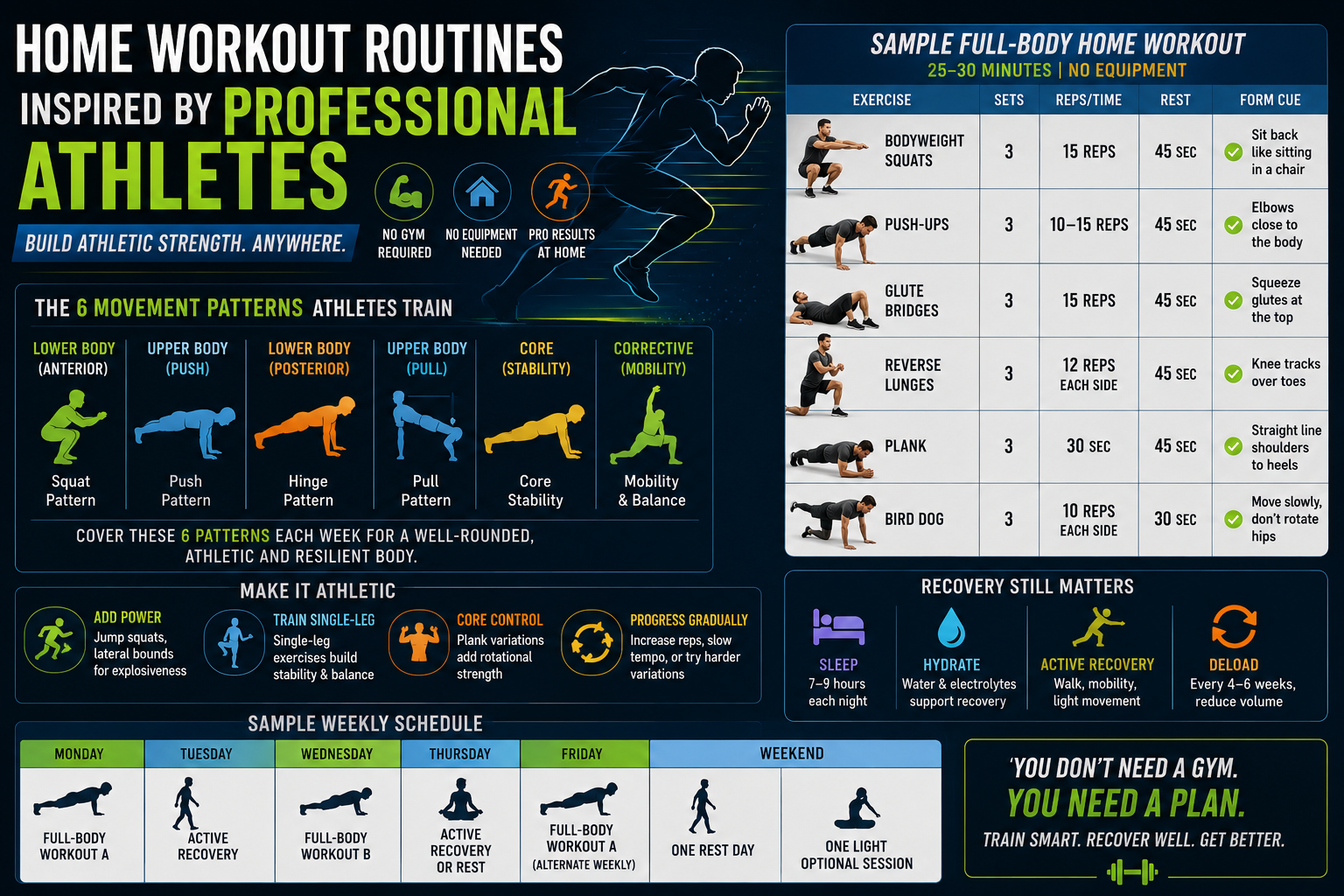
Home Workout Routines Inspired by Professional Athletes
Professional athletes train with purpose. Every sprint, jump, lift, and recovery session helps them perform better on the field or court. You can bring the same…
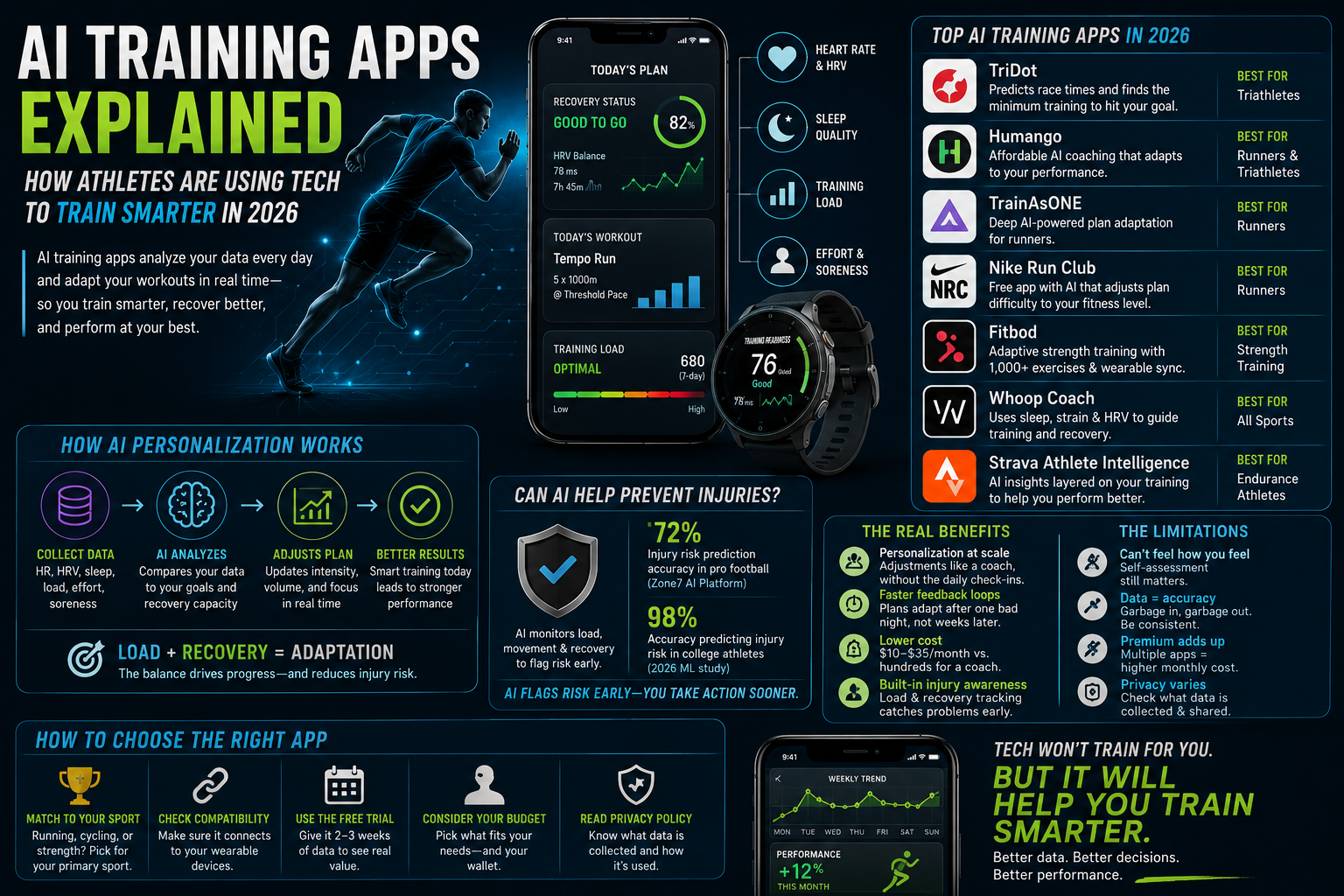
AI Training Apps Explained: How Athletes Are Using Tech to Train Smarter
Athletes used to train off a printed plan and a stopwatch. That plan didn’t know if you slept badly, missed a session, or showed up already…