month, that rhythm changes. A period arrives early, comes late, skips entirely, or shows up heavier or lighter than usual. If you’ve searched for answers about irregular periods, you’re not alone. Menstrual irregularities are one of the most common reasons women visit a gynecologist, and the causes range from everyday lifestyle factors to underlying medical
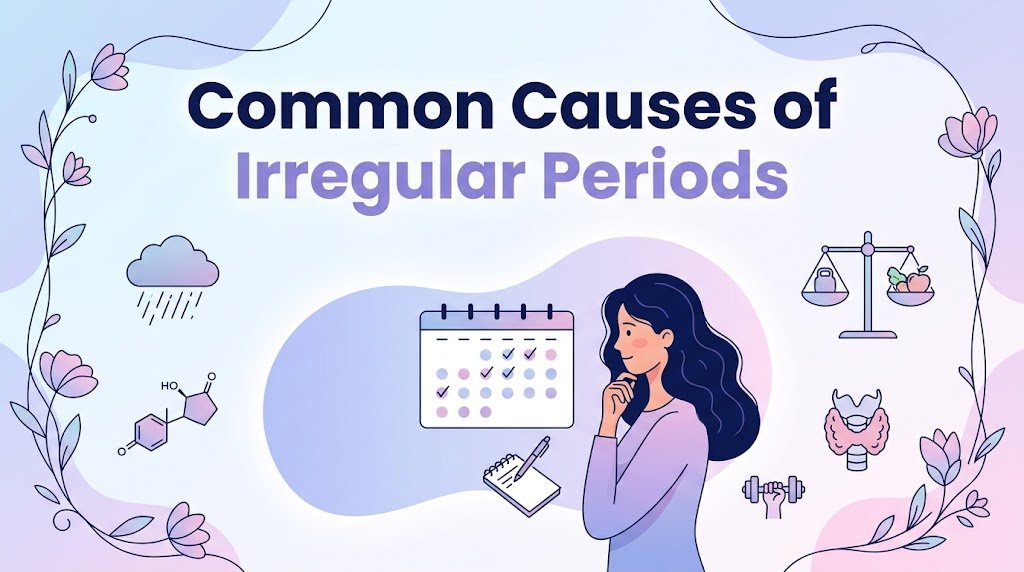
month, that rhythm changes. A period arrives early, comes late, skips entirely, or shows up heavier or lighter than usual. If you’ve searched for answers about irregular periods, you’re not alone. Menstrual irregularities are one of the most common reasons women visit a gynecologist, and the causes range from everyday lifestyle factors to underlying medical conditions.
This guide breaks down what counts as an irregular period, the most common causes of irregular menstrual cycles, and when it’s time to talk to a healthcare provider.
What Counts as an Irregular Period?
A typical menstrual cycle runs anywhere from 21 to 35 days, with bleeding lasting about four to seven days. A cycle is generally considered irregular if:
- Cycles occur fewer than 21 days or more than 35 days apart
- Three or more periods are missed in a row
- Cycle length varies by more than 7–9 days from month to month
- Bleeding is much heavier or lighter than usual, or lasts longer than seven days
- Periods are accompanied by severe pain, cramping, or unusual clotting
Occasional variation is normal. But when irregularity becomes a pattern, it’s usually a sign that something in the body’s hormonal balance has shifted.
1. Hormonal Imbalances
The menstrual cycle is controlled by a delicate interplay of hormones—primarily estrogen and progesterone—that rise and fall in a predictable pattern each month. When this balance is disrupted, ovulation can become inconsistent, leading to irregular bleeding. Hormonal imbalance is considered the root cause behind most of the specific conditions listed below, which is why doctors often start by checking hormone levels when investigating irregular cycles.
2. Polycystic Ovary Syndrome (PCOS)
PCOS is one of the most frequently diagnosed causes of irregular periods, affecting a significant percentage of women of reproductive age. It’s a hormonal disorder in which the ovaries produce higher-than-typical levels of androgens (male hormones), which can prevent regular ovulation. Women with PCOS often experience irregular or missed periods along with other symptoms such as excess facial or body hair, acne, weight gain, and small fluid-filled sacs on the ovaries that can be seen on ultrasound.
3. Thyroid Disorders
The thyroid gland plays a major role in regulating metabolism—and it also has a direct effect on the menstrual cycle. Both an underactive thyroid (hypothyroidism) and an overactive thyroid (hyperthyroidism) can cause periods to become irregular, unusually heavy, or unusually light. Other clues that a thyroid issue might be involved include fatigue, unexplained weight changes, hair thinning, and sensitivity to temperature.
4. Stress
Chronic stress doesn’t just affect mood—it affects the part of the brain (the hypothalamus) that regulates the hormones controlling ovulation. High or prolonged stress can delay ovulation or stop it altogether for a cycle, resulting in a late or skipped period. Major life changes, work pressure, grief, or physical illness can all trigger this stress response.
5. Significant Weight Changes or Disordered Eating
Both rapid weight loss and rapid weight gain can interfere with the hormones needed for regular ovulation. Very low body fat—sometimes seen with restrictive eating patterns or intense training—can cause periods to become irregular or stop entirely, a condition sometimes called hypothalamic amenorrhea. On the other end, higher body weight can also increase estrogen production and disrupt normal cycling.
6. Excessive Exercise
Intense physical training, especially when combined with inadequate calorie intake, is a well-documented cause of irregular or missed periods. This is common among competitive athletes, dancers, and runners and is sometimes referred to as part of the “female athlete triad,” which links low energy availability, menstrual dysfunction, and bone density loss.
7. Perimenopause
In the years leading up to menopause — typically starting in the 40s, though sometimes earlier — estrogen and progesterone levels begin to fluctuate more unpredictably. This transitional phase, known as perimenopause, commonly causes cycles to become shorter, longer, heavier, or lighter, often alongside symptoms like hot flashes, night sweats, and mood changes.
8. Hormonal Birth Control and IUDs
Starting or stopping hormonal contraception—including birth control pills, patches, injections, or hormonal IUDs—frequently causes temporary irregular bleeding as the body adjusts. Non-hormonal copper IUDs can also cause heavier or less predictable periods for some users. These changes are usually most noticeable in the first few months of use.
9. Pregnancy and Breastfeeding
A missed period is one of the earliest signs of pregnancy, so it’s always worth ruling out first when a period doesn’t arrive on schedule. Breastfeeding can also delay the return of regular periods after childbirth due to elevated prolactin levels, which suppress ovulation.
10. Uterine Fibroids and Polyps
Fibroids are noncancerous growths that develop in or on the uterus, while polyps are small overgrowths of tissue in the uterine lining. Both can alter the shape of the uterus or interfere with the endometrial lining, leading to heavier bleeding, spotting between periods, or longer cycles.
11. Diabetes and Insulin Resistance
Poorly managed blood sugar levels can affect hormone regulation and are linked to menstrual irregularities, partly because insulin resistance is closely tied to conditions like PCOS. Women with diabetes sometimes notice their cycles become less predictable when blood sugar is not well controlled.
12. Certain Medications
Some medications can interfere with the menstrual cycle as a side effect, including certain antidepressants, blood thinners, thyroid medications, and chemotherapy drugs. If a new medication coincides with a change in your cycle, it’s worth mentioning to your prescribing doctor.
When to See a Doctor
Occasional irregularity, especially in the first few years after your first period or during perimenopause, isn’t usually a cause for alarm. However, it’s a good idea to schedule an evaluation if you experience:
- No period for three months or more (when not pregnant or breastfeeding)
- Periods suddenly becoming much heavier, longer, or more painful than usual
- Bleeding between periods or after sex
- Irregular periods accompanied by excessive hair growth, acne, or unexplained weight changes
- Any postmenopausal bleeding
A healthcare provider can run blood tests, order an ultrasound, or perform a physical exam to identify the underlying cause and recommend appropriate treatment—which might include lifestyle adjustments, hormonal therapy, or treatment of an underlying condition.
Frequently Asked Questions
1. Can irregular periods be normal?
Yes. Cycle length can naturally vary slightly from month to month, and irregularity is especially common in the first few years after periods begin and in the years before menopause.
2. Does stress really delay a period?
Yes. Stress hormones can interfere with the signals your brain sends to your ovaries, which can delay or suppress ovulation for that cycle.
3. Is PCOS the most common cause of irregular periods?
PCOS is one of the most common hormonal causes, but thyroid disorders, stress, weight changes, and perimenopause are also frequent culprits. A doctor can help determine the specific cause through testing.
4. Should I track my cycle if it’s irregular?
Yes. Keeping a record of cycle length, flow, and any symptoms can help your healthcare provider identify patterns and narrow down the cause more efficiently.
Conclusion
Irregular periods can stem from a wide range of causes, from temporary stress and lifestyle factors to underlying hormonal or reproductive health conditions. While occasional irregularity is often harmless, a persistent pattern of unpredictable cycles is worth discussing with a healthcare provider, since early evaluation can help catch treatable conditions before they affect long-term health.
This article is for informational purposes only and is not a substitute for professional medical advice. If you have concerns about your menstrual cycle, please consult a licensed healthcare provider.



















Leave a Comment
Your email address will not be published. Required fields are marked with *