Most people who menstruate expect some monthly discomfort, but a period that soaks through a pad every hour, keeps you from leaving the house, or leaves you feeling drained and dizzy is not something you simply have to live with. Medically known as menorrhagia, heavy menstrual bleeding is one of the most common gynaecological complaints,
Most people who menstruate expect some monthly discomfort, but a period that soaks through a pad every hour, keeps you from leaving the house, or leaves you feeling drained and dizzy is not something you simply have to live with. Medically known as menorrhagia, heavy menstrual bleeding is one of the most common gynaecological complaints, yet many women go years without seeking help because they assume heavy bleeding is just “how their body works.”
Understanding the possible causes of heavy periods and knowing which warning signs call for medical attention can help you get the right diagnosis and treatment sooner rather than later.
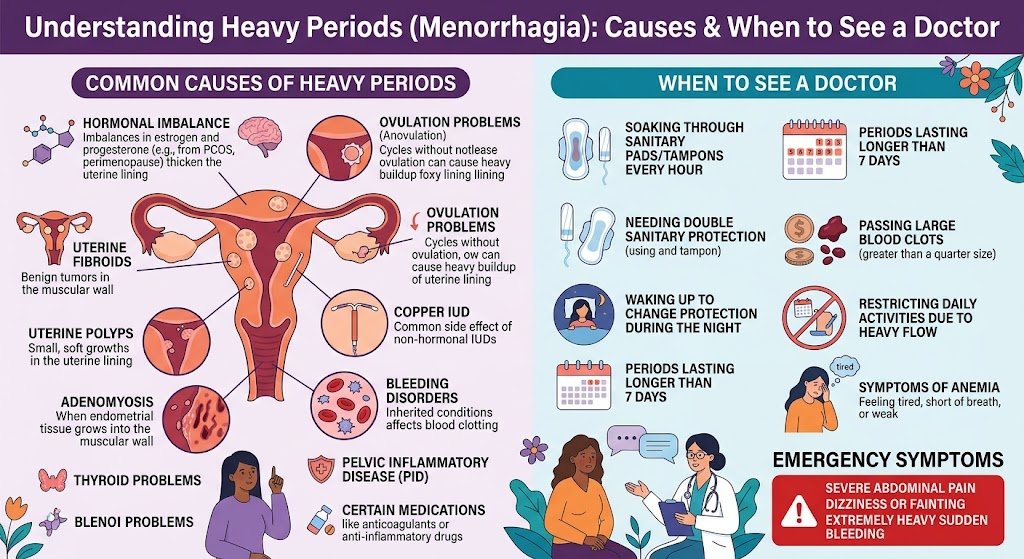
What Counts as a Heavy Period?
Menstrual flow varies a lot from person to person, so there’s no single blood-loss number that applies to everyone. That said, doctors generally consider a period “heavy” if you experience:
- Bleeding that lasts longer than seven days
- Soaking through one or more pads or tampons every hour for several hours in a row
- Needing to double up on pads or tampons to manage the flow
- Waking up at night to change protection
- Passing blood clots larger than a grape or a quarter
- Bleeding heavy enough to limit daily activities, work, or social plans
If any of this sounds familiar, it’s worth exploring what might be behind it.
Common Causes of Heavy Periods
1. Hormonal Imbalance
In a typical cycle, estrogen and progesterone work together to control the buildup and shedding of the uterine lining (the endometrium). When these hormones fall out of balance, the lining can grow too thick before it sheds, leading to heavier-than-normal bleeding. This type of hormonal imbalance is common around puberty and perimenopause, when hormone levels are naturally in flux.
2. Anovulation (Not Ovulating That Cycle)
If the ovaries don’t release an egg during a given cycle, the body doesn’t produce enough progesterone to properly regulate the lining of the uterus. Over time, this can cause the endometrium to become excessively thick, resulting in a heavier period when it finally sheds. Anovulatory cycles are especially common in teenagers, women approaching menopause, and women with conditions like PCOS.
3. Uterine Fibroids
Fibroids are noncancerous growths that develop in or on the muscular wall of the uterus. Depending on their size and location, fibroids can significantly increase menstrual blood flow and prolong bleeding. Fibroids are extremely common; many women have them without ever knowing, since they don’t always cause symptoms—but larger or more numerous fibroids are a frequent cause of heavy periods.
4. Uterine Polyps
Similar to fibroids, polyps are small, usually benign growths that form on the inner lining of the uterus. Because they sit directly on the endometrium, even small polyps can cause heavy or irregular bleeding, including spotting between periods.
5. Adenomyosis
Adenomyosis occurs when the tissue that normally lines the uterus grows into the muscular wall of the uterus itself. This can cause the uterus to enlarge and often leads to heavy, prolonged, and painful periods. It’s most commonly diagnosed in women in their 40s and those who have had children, though it can occur at any reproductive age.
6. Thyroid Disorders
The thyroid gland helps regulate many of the body’s hormonal processes, including the menstrual cycle. An underactive thyroid (hypothyroidism) in particular has been linked to heavier and more prolonged periods, often alongside symptoms like fatigue, weight gain, and cold sensitivity.
7. Bleeding Disorders
Underlying bleeding or clotting disorders, such as von Willebrand disease, a condition that affects the blood’s ability to clot properly, can cause heavy menstrual bleeding, especially if heavy periods have been present since a person’s very first period. Other clues pointing to a bleeding disorder include easy bruising, frequent nosebleeds, or a family history of similar bleeding issues.
8. Intrauterine Devices (IUDs)
Non-hormonal copper IUDs are well known for causing heavier and sometimes more painful periods, particularly in the first several months after placement. If heavy bleeding started shortly after getting an IUD, the device itself may be a contributing factor.
9. Obesity and Insulin Resistance
Excess body fat can lead to higher circulating estrogen levels, since fat tissue produces estrogen independently of the ovaries. Combined with insulin resistance, this can throw off the natural hormonal balance needed for a regulated cycle, contributing to heavier bleeding. (Note: This is one of several contributing factors and is not a judgment on any individual’s body—many women with heavy periods have no weight-related risk factors at all.)
10. Certain Medications
Blood-thinning medications (anticoagulants), certain anti-inflammatory drugs, and some hormone-based treatments can increase menstrual blood flow as a side effect. If heavy bleeding began after starting a new medication, it’s worth mentioning to the prescribing doctor.
11. Pregnancy-Related Causes
A late, unusually heavy period can sometimes be an early miscarriage, especially if paired with cramping. Heavy bleeding can also stem from other pregnancy-related complications. Any suspected pregnancy complication involving heavy bleeding warrants prompt medical attention.
12. Cancer or Precancerous Changes (Rare)
In rare cases, heavy or abnormal bleeding can be a sign of precancerous changes or cancer of the uterus or cervix. This is more likely in postmenopausal women, those with a history of abnormal Pap smears, or those with other risk factors such as a family history of uterine cancer. This possibility is uncommon but is one of the key reasons doctors recommend evaluating persistent heavy bleeding rather than ignoring it.
The Hidden Risk: Iron Deficiency Anaemia
One of the most overlooked consequences of ongoing heavy periods is iron deficiency anaemia. Losing a significant amount of blood every month, month after month, can gradually deplete the body’s iron stores faster than diet alone can replace them. This can lead to persistent tiredness, weakness, dizziness, shortness of breath, and pale skin. If you experience heavy periods along with any of these symptoms, a simple blood test can check your iron and haemoglobin levels.
When to See a Doctor
Heavy periods are common, but they are not something you’re required to simply tolerate. Consider scheduling an appointment if you notice:
- Periods that consistently last longer than seven days
- Needing to change a pad or tampon every hour for several hours in a row
- Passing clots larger than a grape
- Bleeding that interferes with work, sleep, or daily activities
- Symptoms of anaemia, such as fatigue, dizziness, or shortness of breath
- Bleeding between periods, after sex, or after menopause
- Heavy periods that started suddenly or changed significantly from your usual pattern
A doctor will typically start with a physical and pelvic exam and ask about your medical and family history. From there, they may recommend blood tests (to check for anemia or thyroid function), a pelvic ultrasound, or, in some cases, an endometrial biopsy to look more closely at the uterine lining. Once a cause is identified, treatment options range from iron supplementation and hormonal therapy to minimally invasive procedures, depending on what’s driving the bleeding.
Frequently Asked Questions
1. How much bleeding is considered “too much” during a period?
There’s no universal cutoff, but soaking through a pad or tampon every hour for multiple hours, passing large clots, or bleeding for more than seven days are all signs your flow may be heavier than typical.
2. Can stress cause heavy periods?
Stress is more commonly linked to irregular or missed periods rather than heavier bleeding, though chronic stress can indirectly affect hormone balance, which may play a role in some cases.
3. Are heavy periods a sign of infertility?
Not necessarily, but some of the underlying causes of heavy periods, such as PCOS, fibroids, or thyroid disorders, can also affect fertility. If you’re trying to conceive and dealing with heavy periods, it’s worth discussing both concerns with your doctor.
4. Do heavy periods get better with age?
It depends on the cause. Heavy bleeding related to adolescence or perimenopause may improve once hormone levels stabilize, while heavy bleeding caused by fibroids, polyps, or bleeding disorders usually requires specific treatment to improve.
5. Is it normal to pass blood clots?
Small clots are common and usually not a concern. Clots larger than a grape, especially alongside heavy flow, are worth discussing with a healthcare provider.
Conclusion
Heavy periods can stem from a wide variety of causes, ranging from temporary hormonal shifts to structural issues like fibroids or polyps, and occasionally more serious underlying conditions. Because heavy bleeding can affect both your daily quality of life and your long-term health, particularly through iron deficiency anemia. It’s worth having a persistent pattern of heavy periods evaluated rather than managing it alone indefinitely. With the right diagnosis, most causes of heavy menstrual bleeding are very treatable.
This article is for informational purposes only and is not a substitute for professional medical advice. If you are concerned about heavy menstrual bleeding, please consult a licensed healthcare provider.

















Leave a Comment
Your email address will not be published. Required fields are marked with *