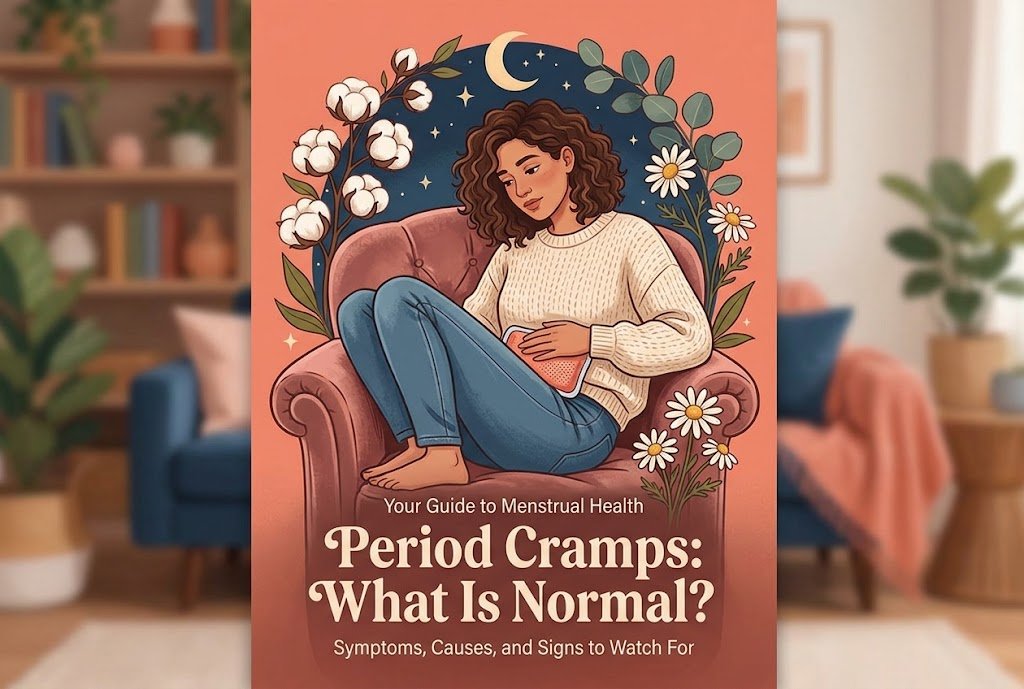
Almost every woman gets period cramps at some point. More than half of women feel some pain during their period. But the pain is not the same for everyone. Some cramps are mild. Some are severe. This makes it hard to know what counts as “normal.” This guide will help. We will cover what causes
Almost every woman gets period cramps at some point. More than half of women feel some pain during their period. But the pain is not the same for everyone. Some cramps are mild. Some are severe. This makes it hard to know what counts as “normal.”
This guide will help. We will cover what causes cramps. We will explain what normal pain feels like. We will also share the warning signs that mean you should see a doctor.
What Causes Period Cramps?
Your body makes chemicals called prostaglandins. These are made in the lining of your uterus. They cause your uterus to squeeze. This squeezing helps shed the uterine lining. That squeezing is what you feel as a cramp.
Prostaglandin levels are highest on day one or two of your period. This is why cramps are often worse at the start. Pain usually eases as your period goes on.
Doctors call this normal type of cramping primary dysmenorrhea. It is not caused by any other health problem. When cramps come from a health issue, doctors call it secondary dysmenorrhea. This type behaves differently. It often needs its own treatment.
What Does a Normal Period Cramp Feel Like?
Normal cramps tend to follow a simple pattern:
- Timing: Pain starts one to three days before your period. It often peaks in the first day or two of bleeding.
- Location: A dull or achy feeling in your lower belly. It may spread to your lower back or thighs.
- Duration: Pain usually fades within two to three days.
- Intensity: Mild to moderate. You can often manage it with rest, heat, or an over-the-counter pain reliever.
- Other symptoms: Some nausea, tiredness, or bloating is common too.
If this sounds like you, your cramps are likely normal. This is called primary dysmenorrhea. It is very common and usually not a sign of a bigger problem.
When Period Cramps Are Not Normal
Sometimes cramps go beyond the usual pattern. Watch for these warning signs:
- Pain that stops you from going to work or school
- Pain that does not improve with ibuprofen or naproxen
- Pain that lasts more than two or three days
- Pain that keeps getting worse each month
- New pain that starts later in life, like your 30s or 40s
- Pain during sex, peeing, or pooping around your period
- Heavy bleeding or large clots along with the pain
- Bad bloating or painful bowel movements during your period
If you notice several of these signs, something else may be going on.
Common Causes of Abnormal Period Cramps
Endometriosis
This happens when tissue like your uterine lining grows outside the uterus. It can grow on your ovaries or other pelvic organs. This tissue also bleeds each month. This causes swelling and pain. The pain is often worse than normal cramps. It can also hurt during sex or bowel movements.
Adenomyosis
This happens when the uterine lining grows into the muscle wall of the uterus. It can make the uterus bigger. It often causes heavy, long, and painful periods. It is most common in women in their late 30s and 40s.
Uterine Fibroids
Fibroids are growths in or on the uterus. They are not cancer. But they can cause stronger cramps. They can also cause heavier bleeding.
Pelvic Inflammatory Disease (PID)
PID is an infection in the reproductive organs. It is often caused by an untreated STI. It can cause pelvic pain, fever, and unusual discharge. It needs quick treatment.
Ovarian Cysts
These are fluid-filled sacs on the ovaries. They can cause sharp pain on one side. This pain may get worse around your period.
Copper IUDs
A copper IUD can make periods heavier and more painful. This is most common in the first few months after it is placed.
Why Age Matters
Cramps are often worse in your teens and early twenties. This is when prostaglandin levels tend to be highest. Cramps often get milder with age. Many women feel less pain after having a baby.
This is why new pain later in life is a bigger red flag. If your cramps were always mild and suddenly get worse in your 30s or 40s, tell your doctor. This kind of change is often more important than the pain itself.
How to Manage Normal Period Cramps
Try these simple steps for normal cramps:
- Pain relievers: Ibuprofen or naproxen can help. They work best when taken early, right as cramps start.
- Heat: A heating pad on your belly can relax your muscles and ease pain.
- Light movement: Walking, stretching, or gentle yoga can help blood flow and ease cramps.
- Birth control: Hormonal birth control can lower prostaglandin levels. This can mean lighter periods and less pain.
- Rest and water: Being tired or dehydrated can make cramps feel worse.
Track Your Cramps
Keep a simple record of your cramps. Write down when they start. Note how long they last. Track how well pain relievers work. See if your pain is getting better, worse, or staying the same.
This is easy to do with a period app or a notebook. It helps you spot real changes over time. It also gives your doctor useful facts, instead of a vague description.
A Note on Sudden, Severe Pain
Most cramps build up slowly and follow a normal pattern. But sudden, severe pain is different. This is especially true if the pain is only on one side. It is also true if you have a fever, fainting, or heavy bleeding with it.
This type of pain can be a medical emergency. It could be linked to something like a burst ovarian cyst. Do not wait this out. Seek care right away.
When to See a Doctor
See a doctor if you notice any of these:
- Pain that does not improve with over-the-counter medicine
- Pain that stops your normal daily life
- Pain that lasts longer than a few days
- New or different pain compared to your usual pattern
- Pain during sex, peeing, or pooping around your cycle
- Heavy bleeding, large clots, or bleeding between periods
- Fever or unusual discharge with pelvic pain
Your doctor will likely start with questions about your health history. They may also do a pelvic exam. Sometimes they will order an ultrasound. This helps check for things like endometriosis, adenomyosis, or fibroids. Finding the real cause helps you get the right treatment.
Frequently Asked Questions
1. How many days of cramping is normal?
Most cramps peak in the first day or two of your period. They usually fade within two to three days. Pain that lasts much longer is worth mentioning to a doctor.
2. Can period cramps get worse over time?
Cramps that stay about the same each month are usually normal. Cramps that keep getting worse may point to a health issue like endometriosis.
3. Is it normal to feel sick or have diarrhoea with cramps?
Mild nausea or loose stools are common. This is because prostaglandins can affect your gut too. Severe symptoms are worth talking to a doctor about.
4. Do bad cramps mean I can’t get pregnant?
Not always. But some causes of severe cramps, like endometriosis, can affect fertility. If this worries you, ask your doctor about both issues at once.
5. Will my cramps go away as I get older?
For many women, yes. Cramps often ease with age and after childbirth. But this is not true for everyone. New pain later in life should still be checked, not ignored.
Conclusion
Mild to moderate period cramps are a normal part of most cycles. They come from prostaglandins doing their job. But severe pain, worsening pain, or pain with other symptoms is not something to just push through. Pay attention to your own pattern. If it changes, that is important information. Share it with your doctor.
This article is for informational purposes only. It is not a substitute for professional medical advice. If you are worried about your period cramps, please talk to a licensed healthcare provider.
















Leave a Comment
Your email address will not be published. Required fields are marked with *